

Do Warts & Moles Affect a Dog’s Health?

Wart Risks
Warts are passed from dog-to-dog when an uninfected dog comes in contact with an infected dog or catches the virus in the infected dog’s environment. Warts, or viral papillomas, usually are harmless with little to no impact on a dog’s health. If your dog has a large number of oral papillomas, eating and drinking can cause significant pain and lead to malnourishment. There are only two published cases where warts have developed into cancer, according to Veterinary Partner. Oral papillomas have an increased risk of infection due to bacteria of the mouth.
Changing Moles
Moles are caused by an uncontrollable development of cells. As with human moles, most moles on dogs are harmless. Cancerous moles often have irregular borders and occasionally bleed, but even benign moles can look suspicious. Some moles have a cauliflower appearance that resembles warts, but actually are skin carcinomas. Melanoma typically develops from an older mole, so it’s important to observe moles for changes on a regular basis.
Handling Warts
Viral papillomas cannot be transferred to humans, so it’s unnecessary to isolate the dog from your family, but do keep the dog separate from uninfected dogs. Warts are most common in young dogs with immature immune systems. The warts usually disappear without treatment as the immune system matures. If the warts resist the immune system, the warts can be removed surgically or frozen. A bacterial infection secondary to oral papillomas usually is treated with a course of antibiotics.
Managing Suspicious Moles
A vet will observe a skin lesion that is changing shape, changing colors or growing larger. The mole is removed through a biopsy and tested by the veterinarian to determine if the mole is cancerous. If cancer is diagnosed, the cancer will be typed and staged to help the veterinarian choose an appropriate path for treatment. In most cases, the cancer is removed, but if organs are involved, chemotherapy is recommended without surgery. Prolonged sun exposure increases your dog’s risk for skin cancer, so be sure there are shaded areas in your dog’s outdoor environment. Although warts turning into cancer is extremely rare, prompt treatment of warts can reduce your dog’s risk for skin cancer.
Nine Ways to Prevent Canine Cancer
Provide only pure water. Tap water can contain chemicals such as lead, arsenic, and nitrates. Holistic vets strongly advise using a good-quality water purifier to filter your tap water. If you decide to buy a water purifier, keep in mind that although initially costlier than bottled water, it is much cheaper in the long run, costing only pennies a gallon, says Dr. Pitcairn. You may also decide to use bottled or distilled water. Pure water flushes toxins from the body and contributes to the feeling of well-being, says Dr. Goldstein.
Avoid contaminated water. Keep your pet away from street puddles, which can contain cancer-causing toxins such as hydrocarbons and asbestos dust from brakes.
If your pet already has cancer, avoid all vaccinations. Vaccinations can stress your pet’s immune system. For cancer patients, at the very least, avoid vaccinations during treatment because they may counteract any positive and immune-enhancing effects of your home-support program, says Dr. Goldstein. Ask your vet about the homeopathic remedy Thuja occidentalis 30C, which may remove the immune-suppressing effects of vaccinations.
Avoid indoor pollution. Keep your pet away from cigarette smoke. Studies show that secondhand smoke contains hundreds of toxic chemicals that can cause lung cancer in humans. Research also shows a strong correlation between secondhand smoke and oral cancer (squamous cell carcinoma) in cats. In dogs it’s associated with nasal sinus cancer, and even lymphoma, although the connection is weaker. The more people who smoke around a pet, the more at risk the animal is.
Ventilate your house well to reduce indoor air pollution. Grow houseplants that filter the air, such as philodendrons, spider plants, aloe vera, chrysanthemums, and gerbera daisies, but keep the plants out of your pets’ reach. Don’t use harsh chemicals such as pesticides and household cleaners around the house. Seek out natural products, such as vinegar and baking soda.
Keep your dog’s weight under control. Obese dogs are prone not only to cancer but heart ailments, joint problems, diabetes, breathing difficulties, and more. Ask your vet what a healthy weight for your dog should be and strive to achieve it. Feed your dog a healthy diet free from artificial preservatives, artificial flavors, and dyes. A healthy, balanced diet supports your dog’s natural defenses against cancer.
Use natural flea products on your dog.Did you know that flea collars, sprays, and shampoos are full of poisons? Instead of chemical insecticides, use natural and less-toxic methods of flea control such as natural flea shampoos, vacuuming frequently, and combing your pet with a flea comb. Pyrethrins are a natural and safe means of flea control, but need to be applied frequently. D-limonen and other citrus-based methods can be used in dogs, however, avoid D-limonen in cats, as it is toxic to them. Putting borates, salt, or diatomaceous earth into carpet or cracks between the wall and floor is effective for indoor flea control.
Do not allow your pet to ride in the back of a pickup truck.Along with the danger of being thrown out of the truck, your pet will be susceptible to inhaling toxic car fumes and smog. Let your dog get fresh air either by way of a park, beach, or your backyard.
Keep your dog away from pesticides and herbicides on lawns and plants.A report by the National Cancer Institute found that dogs whose owners used weed-killing products containing 2,4-D (2,4-Dichlorophenoxyzcetic Acid) had twice the rate of lymphoma as dogs whose owners did not use it. Cocoa mulch is also dangerous to dogs.
Stay clear of house and garden pesticides. Get rid of pesky insects naturally or seek out the least-toxic products. There are also nontoxic, organic products available.
Keep your pet stress-free.Stress is emotional imbalance caused by anger, frustration, or anxiety. These emotions overwork the liver, where they can stagnate and create tumors, according to Dr. Schwartz.
High anxiety in pets happens for a variety of reasons: neglect, a multiple animal household, an owner going away on vacation, or an owner going through a divorce. Whatever triggers stress in your dog, tune in and help your pet chill out.
Try some de-stressing methods such as: maintaining a regular pet routine (including feeding times and playtimes); massaging your pet; being in tune to your pet’s needs; looking for stress signals (from appetite changes to excessive barking); keeping peace in a multipet household; and providing tender loving care.
Exercise your dog on a regular basis.Research shows that canine fitness not only strengthens immunity to chronic disease such as cancer, but is also essential for optimal health and well-being.
Sustained, vigorous use of the muscles stimulates all tissues and increases blood circulation. Blood vessels dilate and blood pressure rises. As a result, tissues become oxygenated, which helps to clean the cells of toxins. Digestive glands secrete their fluids better, and the bowels move more easily, says Dr. Pitcairn.
Information on Dental Care for Dogs
Other preventive measures include providing dogs with toys and treats that have a tartar-removing effect. These include hard rubber chew toys with hollow interiors that can be stuffed with treats, as well as rope or sheepskin toys, which have fibers that help keep teeth clean.
Periodontal Disease
If a dogs teeth aren’t cared for, the result is sure to be periodontal disease, the most common dental condition affecting dogs. Periodontal disease is the inflammation and infection of the gums and supporting tissues of the teeth. It begins when bacteria-laden plaque and tartar (calculus) build up on teeth, especially below the gum line. Pockets form under the gum line and food lodges in the pockets. These bits of food that remain on teeth are breeding grounds for bacteria. The resulting infection causes bad breath, bleeding and inflammation of the gums, receding gums, loosening of teeth, and eventual tooth loss.
According to the American Veterinary Dental Society, more than 80 percent of dogs over the age of three years develop gum or periodontal disease. Any dog can develop periodontal disease, but its seen most commonly in toy breeds. They have the same number of teeth (42) as larger dogs, but the teeth are crowded into a smaller area. Regular brushing is the best way to get rid of food residue so it doesn’t harden and form the ugly brown deposits known as tartar.
Routine periodontal treatment performed by a veterinarian typically includes ultrasonic scaling, subgingival manual scaling, and polishing. For advanced cases of periodontal disease, some dental specialists use antibiotic therapy, which involves cleaning and polishing the teeth, regular home brushing, and administering antibiotics for the first five days of every month. This regimen decreases the progression of the disease. Another new treatment is Doxyrobe, a gel placed inside the socket to sterilize it. This sustained-release form of doxycycline is used in periodontal pockets to increase attachment. If the dogs teeth are in really bad shape, periodontal surgery such as bone grafting and guided tissue regeneration can be performed. For the most severe cases, extraction is the only option.
Endodontic Conditions
These conditions involve broken or abscessed teeth that require root canals or extractions. Endodontic problems are most common in large dogs, especially shepherd and retriever breeds. These dogs chew a lot on such things as fences, cow hooves, and bones, wearing their teeth down and sometimes breaking them. Even chewing on ice cubes can cause teeth to fracture.
Dental fractures are common in dogs, and treatment is a must if the pulp, the soft tissue that fills the center of a tooth, is exposed. This is not only painful, but it can also lead to tissue death and abscess. A root canal is the preferred method of treatment for such cases, although occasionally extraction may be the best choice.
Don’t ignore a broken tooth, even if it doesn’t seem to bother the dog. The majority of dogs are happier and more active once a tooth repair is made.
Oral Surgery
Oral surgery is done usually to remove teeth or repair fractured jaws. Extractions are performed with minimal pain and discomfort, and jaw fractures can be repaired using new techniques that minimize damage to teeth and ensure a rapid return to normal function.
Dogs may also need oral surgery when they’re diagnosed with tumors of the mouth and throat, which are common in dogs. Radiotherapy and recently developed surgical techniques for removing oral tumors are now available. These techniques often give excellent results, both in terms of cosmetic appearance and prognosis, provided they are applied at an early stage of the disease.
Examine your dogs mouth monthly. Oral tumors can go unnoticed until they’ve reached an advanced stage of development, making successful treatment more difficult. Bring any suspicious swellings or persistent sores to the attention of your veterinarian. Besides oral tumors, dogs can also develop noncancerous masses and swellings such as gingival hyperplasia.
Dog Skin Conditions: Allergies
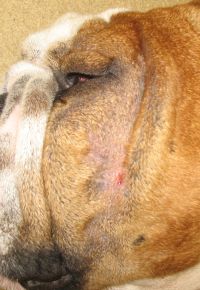
Atopy Flea allergy dermatitis
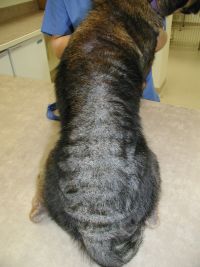
Photos courtesy David A. Senter, DVM
Cause: Inhaled substances such as dust mites and pollens (atopy or allergic inhalant dermatitis, an inherited condition); flea saliva (flea allergy dermatitis); contact with or ingestion of a triggering substance, including food ingredients.
Symptoms: Itching (often severe); skin rashes ranging from slight reddening to generalized inflammation with assorted bumps, pimples, and welt-like lesions; persistent ear infections. Secondary infections by bacteria and yeasts are common.
Treatment: Allergen avoidance, flea control, antihistamines, corticosteroids (“cortisone”), cyclosporine, and hyposensitization (“allergy shots”). Antibiotics and anti-yeast medications are used to treat secondary infections. Often a combination of therapies produces the best results.
Disclaimer: DogChannel.com’s Dog Skin Conditions are intended for educational purposes only. They are not meant to replace the expertise and experience of a professional veterinarian. Do not use the information presented here to make decisions about your dog’s ailment. If you notice changes in your dog’s health or behavior, please take your pet to the nearest veterinarian or an emergency pet clinic as soon as possible.
Dog Skin Conditions: Superficial Bacterial Folliculitis
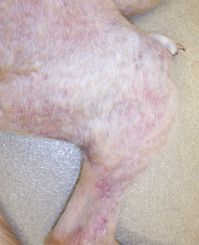
Photo courtesy David A. Senter, DVM
Cause: Most commonly, Staphylococcus (“staph”) bacteria, usually secondary to other skin disorders such as allergies, demodicosis (mange), endocrine problems, trauma, foreign bodies, and many others.
Symptoms: Shorthaired dogs often have patchy hair loss, tufts of hair raised above the coat surface and/or reddish or brown “staining” of white hairs. Longhaired dogs may have more subtle symptoms, including scaly skin, dull coat, and excessive shedding. Regardless of coat type, clipping may be necessary to fully reveal the extent of the disorder. The underlying skin lesions include bumps, pimples, crusts, or scales occurring singly, in clusters, or over large areas; reddened circular hairless areas with or without darker pigmentation in the center; scaly or crusty skin may surround the individual lesions in a circular pattern (epidermal collarettes). The degree of itchiness varies from intense to non-existent.
Treatment: Oral antibiotics for three to four weeks or longer, depending on the response; antibacterial shampoos; antibacterial ointments or sprays. Because superficial bacterial folliculitis occurs secondary to other disorders, identification and concurrent treatment of the underlying cause are essential for successful resolution.
Disclaimer: DogChannel.com’s Dog Skin Conditions are intended for educational purposes only. They are not meant to replace the expertise and experience of a professional veterinarian. Do not use the information presented here to make decisions about your dog’s ailment. If you notice changes in your dog’s health or behavior, please take your pet to the nearest veterinarian or an emergency pet clinic as soon as possible.
6 Tips for Keeping Poisons Away from Your Dog
Like the winners of the Miss America contest or the Nobel Prize, the pageantries and celebrations of the World’s Ugliest Dog did not end when he stepped off the stage.
The two-year-old Chihuahua-Shih Tzu mix named Peanut won the big trophy and the admiration of his peers at the Marin-Sonoma Fair in Petaluma, CA last week, but that was only the beginning of his journey.
Last night, Peanut and his owner Holly Chandler were guests on Jimmy Kimmel Live. Kimmel, who was familiar with the tough road that Peanut, a rescue dog and burn victim has traveled, wanted to make sure he could give the little dog an experience that he would not soon forget: a makeover.
Kimmel’s initial take on Peanut was that “he’s either the World’s Ugliest Dog or the World’s Prettiest Rat.”
In the montage, Peanut is put through all the essentials of a makeover: grooming, accessories and wardrobe. When Kimmel finally brings him on stage, dressed in a multicolored polka dot bowtie and his hair expertly combed, Peanut looks like a star.
Benjamin Franklin said it best: “An ounce of prevention is worth a pound of cure.” This sentiment is especially relevant right now, as March is Poison Prevention Awareness Month. If you haven’t already, now is the time to review the potential poisons and toxins in your home, and make sure they are safely out of reach of your pets.
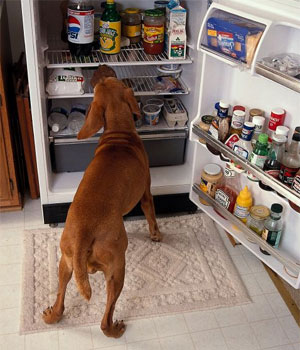
Dogs can’t always dine on the same things people do. Make sure you keep the following foods away from your dog, as even the smallest taste might be dangerous:
Alcoholic beverages
Avocado
Chocolate
Coffee
Macadamia nuts
Onions
Raisins and grapes
Xylitol (an artificial sweetener found in sugarless gum)
Yeast
2. Prevent a Kitchen Nightmare
There are other things to consider keeping away from your pet besides food. Dish soap, degreasing products, dishwasher tablets and steel-wool cleaning pads can all pose a health risk to a nosy pup. Consider using cabinet locks to keep your clean-up supplies away from curious canines, or store them out of the kitchen in a place where you can keep them up and out of reach.
3. The Rx for Safety
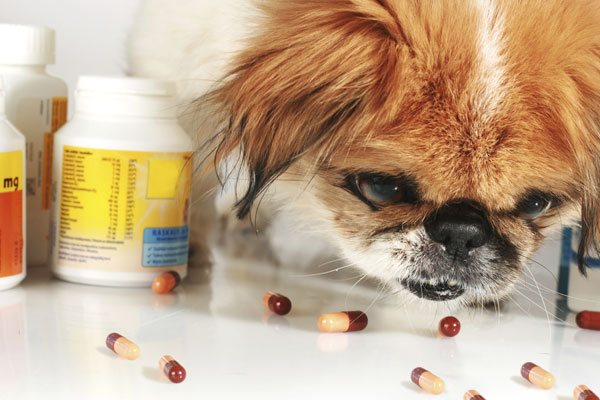
Keep your medication in its original, safety top containers, and store it high out of reach of your pet — preferably in child- or pet-proofed cabinets. With regard to flea medication prescriptions: Don’t give your dog flea medication prescribed for a cat, as these meds are not interchangeable among species. Cat-specific medications may contain additives that can harm your dog. Check with your veterinarian about flea medications that can accommodate both cats and dogs.
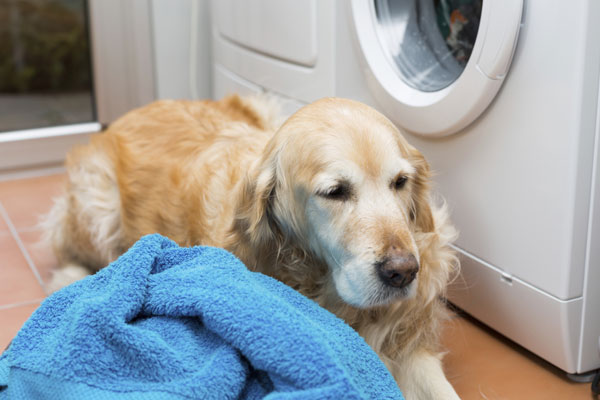
Similar to the kitchen, you’ll want to have a place to store your laundry supplies where they’ll be safely out of reach of your pet. Detergent, dryer sheets and stain removers are all potential poisons if your dog eats them.
Fresh flowers can make your home look and smell beautiful, but sometimes, dogs just can’t help themselves to a nibble or two … or twelve. Lilies, poinsettias, oleander and daffodils are all potentially poisonous if ingested, so keep temptation at bay by nixing the table floral decorations.
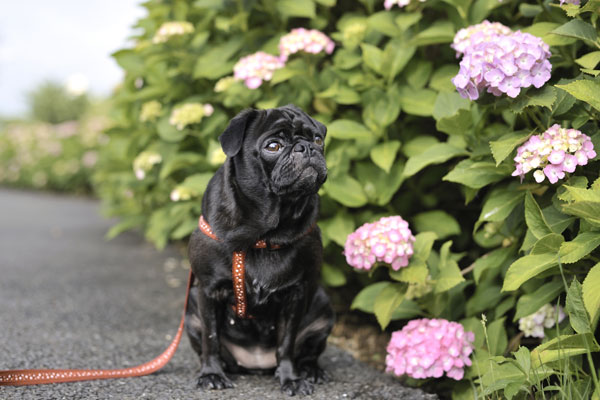
Poison safety doesn’t end once you step outside the house!
Landscape chemicals: Keep lawn and garden chemicals, such as fertilizer and weed killer, stored in a secure bin with a lid when you’re finished using them.
Garage chemicals: Bug spray, lighter fluid, gasoline, charcoal — if it’s in the garage or shed, it’s probably not suitable for your dog. The sweet smell and taste of anti-freeze is often enticing to most pets, but it can be fatal if ingested. Make it a habit to put all chemicals away before you leave the garage (in an out-of-the-way cabinet, if possible).
Trash: Invest in a tamper-proof garbage can that your pet can’t open. Trash bins are treasure (read: poison) troves for curious dogs. The potential for your dog to find and eat something he shouldn’t is too great with an unattended trash can.
Kimmel gave Peanut some sound advice: “I hope this doesn’t change who you are…it’s what’s on the inside that counts.”
He looks beautiful, doesn’t he?
There isn’t much you can change about Peanut to make him into a different dog. A bowtie and combing doesn’t change much about the pain and suffering this friendly dog went through to get to where he is.
A makeover is a nice gift, but truthfully Peanut should be proud to be who he is. You do you, Peanut. We love you just the way you are.
Peanut and his human live in Greenville, South Carolina. They entered Peanut in the contest in order to raise awareness around the subject of animal abuse.
Everything You Need to Know About Dog Bee Stings
Many of us have been stung by bees. No one likes it. When a bee comes by, people often flail and scream and run like Godzilla is attacking the city. Luckily a bee sting is generally not too bad. It might be a little painful and then it turns itchy, but that’s about it, unless of course you are allergic (in which case, please do run and scream).

Symptoms of an Allergic Reactions:
Swelling
Difficulty Breathing
General Weakness
To be safe, the ASPCA recommends taking a dog that has been stung be a bee to your vet for treatment right away, as significant allergic reactions can become life-threatening. This becomes even more important if your dog is stung by multiple bees or stung anywhere inside the mouth. Dogs, if stung multiple times at once, can suffer damage to their kidneys and even die from the complications.
Here are some tips on keeping your dog safe from bee stings:
1. Be smart when outdoors. Bees and wasps alike spend most of their time out and about during the hottest times of the day. Plan to take your dog on walks and have playtime at either dawn or dusk, as it reduces the risk of your pup being stung.
2. Stay away from flowers. Although, this might seem self explanatory for you, dogs might not understand. It is imperative to keep your dog away from flower gardens and the like because of the amount of bees that are usually found in those areas.
3. Light on the fragrances. Bees are attracted to sweet smells. So, if you are out and about with your dog, lay off the perfume and deodorant, as it might bring some unwelcome guests during playtime or your walk.
What if your dog is stung by a bee?
One important thing to always remember is to stay calm. Your best friend cannot be helped if you are not in the right state of mind.
Once you realize that your four-legged friend has been stung, take these steps to minimize the damage:
1. Look at the area where your dog was stung and try to remove the stinger if it is still present. Note: DO NOT try to pinch and pull it out like a splinter, as that can lead to more venom in the dog’s system. Instead, try to flick it out with your finger or a sharp edge, like a credit card.
2. After removing the stinger, apply a mixture or baking soda and water to the sting area. If it is a single bee sting, monitor your dog for breathing troubles, allergic reactions, or other complications. If your dog swells up a considerable amount or has any of the previous symptoms, do not hesitate and go to your nearest veterinarian.
3. If your dog is only having mild symptoms and seems in good health, Dr. Jon Geller, reccomends using over-the-counter diphenhydramine (Benadryl).
“You can give your dog up to 1 milligram per pound of body weight. If your dog is very small, look for pediatric diphenhydramine formulations,” says Geller, who also notes that it’s important to use plain oral tablets, capsules or liquid that contain no other ingredients. “It typically takes about 20 to 30 minutes for the antihistamine to take effect. In some dogs, only an injection of steroids and antihistamine by your veterinarian will be effective.”
If the swelling is anything more than mild, give diphenhydramine at home, then immediately take your dog to the vet for repeat injectable drugs.
3. If your dog has been stung multiple times, go to the nearest veterinarian as soon as possible.
And now that we covered all that serious information that has made you all the better parent to your pet, please enjoy these photos of the only kinds of bees we do like: dog bees.

Photo from TheApiary

Photo from PeteGraham

Photo from Beeminde

Photo from GracieLuShihTzu


|
A New Free Course on Dog Grooming Reveals the Secret Step-by-Step Techniques used by the best Dog Groomers in the country!
Finally, You Can Now Groom your Dog on your own at home without having to hire an expensive groomer! |