

Schools for Training Cadaver Dogs
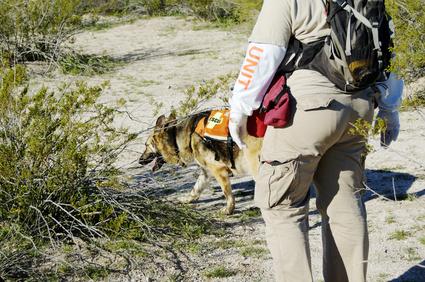
Search and Rescue Dogs of the United States
Search and Rescue Dogs of the United States trains dogs for Type 1 Human Remains Detection (HRD). With this training type, the qualifying dogs should be able to detect human remains within natural debris fields or wilderness areas within a 200 by 200 foot area. They should also be able to locate buried bodies within a 75 by 75 foot area. The dogs must exhibit self-sustainability for 24 hours and have the stamina to endure 12 hour search missions. At the conclusion of the course, the dogs and handlers must pass a standard HRD test.
Mountain View Dog Training
Mountain View Dog Training is owned and operated by dog training specialist Sheila K. McKee. Mountain View trains any working breed of dog for human remains detection but notes that retrievers often work best. Dogs should be 10 months to 2 years old with good social skills and in good health in order to complete the training. Training for HRD certification takes 160 to 200 hours. Mountain View uses FEMA Canine Search Readiness Evaluation Type II Elements, focusing on obedience, agility and directional control. While the school does not offer the HRD evaluation, it states that dogs trained there should be able to pass with little effort. Mountain View also offers an 80 hour handler training course, as well as lifelong handler/dog communication.
Highland Canine Training
Highland Canine Training offers both obedience and working dog training, including human remains detection. Highland Canine Training trains HRD dogs for both water and land detection. Dogs can be trained to alert handlers with an active move or a passive one. The facilities feature FEMA regulated agility courses, a rubble pile and a pond for training. Evaluation for a dog’s potential as a HRD dog is free of charge but the training courses, including handler training, do cost money.
Bear Search and Rescue Foundation
Bear Search and Rescue Foundation earns its name from the courageous rescue dog Bear, one of the first rescue dogs who headed to Ground Zero to seek out survivors and deceased persons after the 9/11 attacks. Following Bear’s passing, his owners created the foundation in order to train other dogs to follow in Bear’s footsteps. While based in New York, Bear Search and Rescue travels around the country teaching trailing and cadaver courses. The courses provided work for both beginners and higher level cadaver dogs. Introduction courses last about three days, while the intensive training courses last about four to five days.
My Dog Is Having Problems Adjusting to a New Environment

Familiarity
A new home has lots of unfamiliar smells, sights and spaces that can intimidate your pooch. Calm him by immediately unpacking and providing him with his old bed, bowls, toys, blankets, leash and crate. Don’t wash these items prior to giving them to him, so that they smell and feel the same to him. Feed him the same food he was eating in his old home or in the shelter you adopted him from, so that you don’t cause him any stomach upset with a new diet. Abruptly changing Fido’s diet can lead to diarrhea and house soiling issues.
Routine
Canine companions thrive when they have a daily routine to follow, which reduces their anxiety in a new environment. Establish this routine during your pup’s first few days with you or, if possible, keep his feeding, exercise and sleeping times the same as in his old home. You also want to keep the locations of his sleeping spot and food and water dishes the same in his new home as in his old one. For example, if you fed Fido in the kitchen and kept his doggie bed or crate in the living room of your old home, do so in your new one. This keeps his routine consistent, even in a different space.
Positive Reinforcement
If Fido is moping around his new home, having potty accidents or being destructive, avoid punishing him for this behavior, which may make him uncomfortable in his new environment and afraid of you as well. Instead, reward him when he’s behaving in a happy or calm way with attention and treats. Walk him around his new neighborhood, rewarding him with treats along the way and slowly introducing him to the new sights, smells, people and other dogs who live in the area. Establish a new potty spot for him outdoors that you consistently bring him out to several times daily to prevent accidents in the home; reward him when he eliminates outside.
Considerations
Bring Fido to the vet if any behavioral issues develop and last for more than a few days after coming to your home. Your vet can rule out a medical condition for any unusual or destructive behavior. Keep a positive attitude and demeanor around your dog during your move and when setting up your new home. Canine companions pick up on the emotions of their caregivers and may become anxious if they sense you are stressed out. Further diminish his anxiety by using a synthetic dog pheromone spray around your new home to put Fido at ease and get him used to his new environment.


|
A New Free Course on Dog Grooming Reveals the Secret Step-by-Step Techniques used by the best Dog Groomers in the country!
Finally, You Can Now Groom your Dog on your own at home without having to hire an expensive groomer! |