

What Dog Breeds Have Weepy Eyes?
Epiphora
There’s a name for all those those tears Buddy’s been shedding: epiphora. Formally referred to as “watery ocular discharge,” excess tears is a common issue for pet owners. If your pooch has excess tears running down his face, over time, they’ll stain his fur to a reddish-brown color. Sometimes it’s hard to notice the stains on a dog with a dark face, but dark-colored dogs experience epiphora as often as their fair relatives. Over time, chronic excess tearing can lead to skin irritation, odor and infection.
Weepy Breeds
Brachycephalic is not a word you see or hear much, but if you break it down to its Greek roots, you’ll understand: “brachy” means short and “cephalic” means head. If Buddy’s a pooch with a short or pushed in face, he’s vulnerable to epiphora. Breeds in this class include shih tzu, Pekingese, boxer, pug, Boston terrier and bulldog. These dogs have shallow eye sockets or hair growth in the skin folds around their eyes, which makes tear drainage a problem. Bichon frise, Maltese and poodles have the same issues, and poodles and cocker spaniels are more prone to blocked tear ducts than other breeds.
Why The Tears
Buddy doesn’t have to be of a breed that’s vulnerable to weepy eyes to have them. There are two reasons a dog may have weepy eyes: irritation and poor tear drainage. Allergies, stray hairs or objects, environmental irritants such as smog or dust, and ingrown hairs all can cause irritation leading to epiphora. If that’s Buddy’s problem, the vet should be able to address the issue and put an end to the crying and the stains. However, sometimes the tears don’t drain properly. In a healthy eye, when a dog’s eye tears up, the tears will go through small “drain holes” in his eyes to his nasal passage down to his throat. Conditions interrupting this process include shallow eye sockets, eyelids that are turned inward, blocked tear drainage holes and hair growth around the eye, which redirects tears onto the face.
Controlling Tears
In some cases, surgery can help dry up those excess tears. A blocked duct can be flushed out and some eyelid problems can be corrected surgically to eliminate the irritation. If the irritation is due to something in the environment, minimizing Buddy’s exposure to it will help. There’s nothing to do for a dog with shallow eye sockets; after all, it’s the way he’s made. Your best option is to keep on top of his tear stains by gently washing around his eyes with a wet, warm paper towel. Your vet can recommend appropriate wipes to safely keep his face clean and tear-stain free.
Dog Breeds Prone to Epilepsy
Breed Predisposition
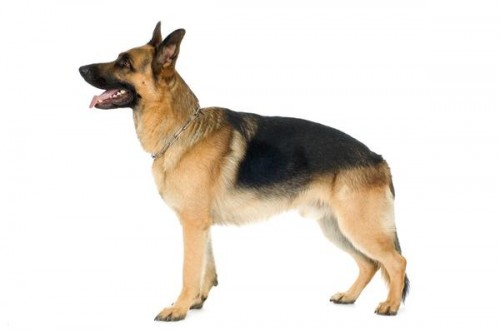
Breeds with predisposition for congenital epilepsy include Australian shepherds, beagles, Belgian Tervurens, border collies, boxers, cocker spaniels, dachshunds, German shepherds, golden retrievers, Irish setters, keeshonds, Labrador retrievers, poodles, Saint Bernards, Shetland sheepdogs, Siberian huskies, springer spaniels, Welsh corgies, wirehair fox terriers and vizslas. Recessive traits also show in the Bernese mountain dog, Irish wolfhound and Finnish spitz.
Why Do Stray Dogs Adopt People & Never Leave?

Understanding Canine Behavior
Once you understand the nature of canines, it’s clear why stray dogs adopt people and never leave. Wolves are pack animals. That means they are gregarious and social and need to stay with other wolves. In the wild, wolves need to live, work and hunt in a pack in order to survive. An ostracized wolf, a lone wolf, cannot survive on his own. Since domestic dogs are descended from wolves, they still have those wild instincts. Today’s domestic dog knows he cannot survive for very long on his own, so he seeks out others of his kind. Failing that, a human will do.
Stray Dogs
Reliable statistics for the number of stray dogs roaming free in the United States are not available, though there are municipalities and counties across the country that keep their own statistics and many efforts are underway to curb the number of stray dogs trying to survive. For example, in the Florida Everglades, an estimated hundred or more dogs are living in swamplands of south Florida. These dogs are starving, sick, diseased, injured and living in extreme temperatures under dangerous living conditions. Aside from speeding cars, alligators and snakes, they face starvation, dehydration and parasites, both internal and external. Many of these dogs were once owned by families who subsequently dumped them to fend for themselves. Therefore, they know a better life. If given a chance to find another home, most of them would take it.
Domestic Animals
There was a time, hundreds of years ago, when dogs were able to survive in the wild by employing their instincts and survival skills. However, once dogs became domesticated, they lost many of those feral survival skills such as hunting, finding food and water, staying safe and maintaining health. Today’s stray dog is more likely to be a former family pet who either got lost or was deliberately dumped. Dogs who follow people home and “adopt” them will never leave because, once they have had the experience of being hungry and suffering in temperature extremes, they will choose family life over stray life every time.
So You’ve Been Adopted
If you have had the great fortune to have been adopted by a stray dog, there are some things to consider to ensure a successful relationship. First, take the dog to a vet to be sure he has no major health problems that need immediate attention, such as acute injuries, heartworm or other life-threatening diseases. He will need a good bath, and this can either be a bonding experience for the two of you or you can seek the services of a professional groomer. Make an appointment for a complete check-up and sterilization, if necessary. Introduce your new companion to any existing companion animals and then sit back and enjoy your new pet, secure in the knowledge that you are a bona-fide hero for saving a life.
What Does it Cost to Adopt a Dog?
Adoption Fee
Your first expense before you bring Rover home will be the adoption fee. Trying to guess the amount of the adoption fee is a bit, well, impossible. And no, the fee doesn’t change based on the level of cuteness or the breed — or lack of it — of the doggie you want. Adoption fees vary from city to city and depend on what the “adoption package” includes. Most shelters will sterilize and vaccinate Rover before you can take him home, but some shelters also microchip, test for heartworm and more. All this will affect the adoption fee. Fees can range from anywhere from as low as $25 to as high as $200 or more.
Special Adoption Fees
Some shelters have different prices depending on the age or the size of the dog. So in this case, choosing a young ball of fur or a cute lap dog will cost you. If you need an example, here it is: at the time of publication, the Michigan Humane Society will charge $275 for adult lap dogs — those that weigh 20 pounds or less — and cute fluffy dogs under four months of age. Want any other dog? It will cost you just $175 to take him home. This is just a clever way to nudge you toward adopting an older or bigger dog, rather than being blinded by the cuteness of the younger puppies.
Supplies
Even before you head to the shelter to pick your new bouncy companion, you should stock up on supplies at the pet store. Sorry, the adopted puppy won’t come with his own luggage full of necessities, so you should prepare for it. Aside from basic needs — such as bowls, collars and ID tag, toys and a leash — you’ll also need pee pads, a crate if you plan on doing crate training, a dog bed and whatever else falls in the “oh-that’s-so-cute” category when you’re at the store. For all this, you will need $100 or more again, and that’s before you even buy the puppy food.
Follow-Up Care
The younger the puppy, the more it will cost you to adopt him. You already learned that when you looked at the higher adoption fees, but here’s some more. If you adopt a very young dog, chances are he’s only had one or two rounds of vaccines, and he might need more. That could easily come up to $100 or more per vet visit. The good news? Adopting a doggie from a shelter will save you the cost of spaying or neutering, which can easily cost you up to $300, depending on Fido’s size, sex and age.
About Puppy Adoption
Shelter or Rescues
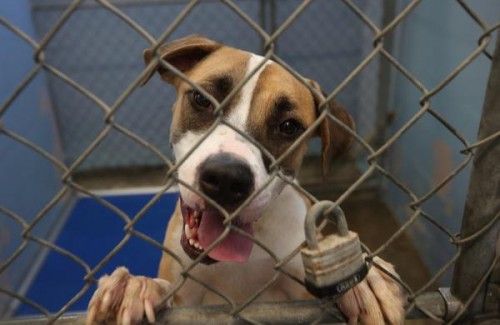
Shelters and rescues are where people typically adopt puppies. Shelters usually are government funded. Dogs receive their vaccinations, heartworm prevention, spaying and neutering at lost cost. Dogs there, however, could be euthanized if not adopted or if they become ill. Rescues typically don’t euthanize; they pay the costs to treat dogs who get sick in addition to spaying or neutering and giving vaccinations. Sometimes veterinarians donate their services to help rescues stay afloat. Rescues need donations and volunteers to exist.
Breed Specific
Many folks don’t think of puppy adoption when they have a specific breed in mind. But they shouldn’t be so fast to rule out adoption. About 25 percent of pets in shelters are purebreds, according to the HSUS. Breed-specific rescue groups exist, too. Perform a breed-specific search by typing the breed’s name in a search engine followed by the word “rescue” to determine whether one is near you.
Why They’re There
Puppies typically are in shelters because their owners move or because the landlord doesn’t want the pup to stay. It isn’t correct to assume that the puppies are undesirable. Many wonderful puppies who already might be housebroken or know basic commands are in shelters. Plus, shelter workers get to know the pups and can help match you with a puppy that meets your needs.
Be Prepared
Shelters and rescues encourage people to adopt puppies, but they also want the pups to go to a “forever” home. Be prepared to show that you can provide a good home for an adopted puppy. You need to commit to keeping this dog for 10 or 15 years, be able to spend time with the dog and have adequate space depending on the breed you select. You also must be able to afford to care for the dog. Expect to pay several hundred dollars a year for a dog and more if you have one who needs professional grooming. Also, consider the rest of your household. Tell the shelter workers or rescue volunteers if you have babies, toddlers or other pets.
Do Dogs Remember Their Previous Owners?

Argos, the Great Dog Who Remembered
Anecdotal evidence supports the idea that dogs do remember previous owners. Argos, as told in Homer’s classic, The Odyssey, waits 20 years for his master, Odysseus, to return finally from his worldly travels. As soon as the dog recognizes his long-lost master, he has strength only to drop his ears and wag his tail, and then dies. True, it’s a sad story, but it has become a strong metaphor for the faithfulness of dogs.
The Concept of Time & Remembering
Patricia McConnell, PhD, and author of several books about dog behavior, says it seems reasonable that dogs have some sense of time. As proof, she cites a study published in Applied Animal Behavior Science that found that the longer dogs are left alone, the more intense they greet their owners. So time — even 20 years in the case of Argos! — doesn’t seem to affect a dog’s memory of relationships, past and present.
Dog vs. Human Memory
Humans, unlike dogs, have a concept of time known as “episodic memory,” using artificial measures of time, like seconds, minutes, and hours, to distinguish events. Also, we tend to remember when something happened by relating it to other events. Dogs, on the other hand, can tell how much time has passed only since the event happened. Still, that doesn’t mean dogs can’t remember the past, or people from the past.
Survival, Fear & Trust: Reasons to Remember
Dogs remember for other reasons, too. It’s commonly believed they remember what they need to in order to survive, or because of fear. Dogs remember past unpleasant or dangerous circumstances to avoid having similar situations in the future. Finally, a type of survival memory is connected to remembering friends, owners, and those people with whom dogs generally feel safe and can trust. Therefore, if a previous owner was kind, the dog may well remember him.
Tips on How to Help a Dog Adjust to a New Owner and Home
Relaxed Demeanor
When you arrive to take home your cutie, behave in a low-key manner. If you act excited, the dog may become overwhelmed. Let him come to you. Stroke his back and speak to him softly. Allow him to do what is necessary to acquaint himself to you, such as smelling you. When he seems at ease, you can prepare to leave. A calm start may steer the whole course of your dog’s journey to adjustment. Try to have a family member or friend of driving age accompany you on your journey back. If one person drives, the other person can comfort the potentially confused, anxious or frightened dog. If the dog’s aggressive, you’ll want to muzzle and crate him securely for the ride.
Stability
Dogs, similarly to cats, rely heavily on routines. If you can provide your new dog with a stable daily schedule, he may take take to life with you a lot more quickly. Dogs feel safe when they have dependable routines, whether they pertain to mealtimes, outdoor breaks and even play. Minimize the chaos and uncertainty in your new dog’s life by cutting down on his guesswork.
Time
Helping a dog get settled into a new home isn’t an instantaneous process. The more time you have to get to know your pet in the critical first couple of days the better. Schedule to bring your dog home when you have a comparably open schedule — preferably on Friday afternoon before the weekend officially starts. Avoid allowing your dog the opportunity to stay home by himself until you’ve had plenty of time to examine his behavioral patterns.
New People and Pets
Too much excitement can be stressful on dogs, so don’t bombard your fluffy pal with too much newness at first. Don’t introduce your pet to anyone outside of the household until he’s had some time to adapt. Keep any other household pets away from him at first. A quiet and isolated room equipped with bedding, food, water and toys is appropriate. When you allow your new pooch to meet any other pets, monitor the meetings and keep them brief. If they do well around each other, reward them with yummy treats.
Diet
Abrupt and sudden food changes can be distressing on doggie’s digestive system, and can bring upon diarrhea and tummy ache. Prevent this situation from occurring by either feeding your pooch foods he’s already familiar with from previous living arrangements or by making all adjustments gradual. For example, you may want to start off by feeding him solely his previous food, and then the next day mixing in some of the new stuff, and so on until he is eating 100 percent of the new kind.
Slowly But Surely
Getting a dog used to a new home is not a race. Practice makes perfect. Be patient with your newbie. If your pooch isn’t ready to do something, he won’t, whether it comes to dealing with house guests or anything else. Don’t push things. If you are relaxed, your dog can sense that and may follow suit. Canines who don’t tend to be nervous breeds.


|
A New Free Course on Dog Grooming Reveals the Secret Step-by-Step Techniques used by the best Dog Groomers in the country!
Finally, You Can Now Groom your Dog on your own at home without having to hire an expensive groomer! |