

Asian Dog Breeds

Small Breeds
If you looking for a dog who can’t shed — because it doesn’t have hair — consider the Chinese crested. There’s also a variety with hair, known as the powderpuff. These small, affectionate dogs mature between 11 and 13 inches tall at the shoulder. The Pekingese sports lot of hair. This brachycephalic, or short-nosed, breed was prized by Chinese royalty. Under AKC standards, adult Pekingese can’t exceed 14 pounds. The lhasa apso hails from Tibet, where he was known as the “barking lion sentinel dog.” An excellent watchdog, this long-haired canine matures between 10 and 11 inches high, weighing between 12 to 18 pounds. The shih tzu, possibly resulting from a cross between the Pekingese and the lhasa apso, makes a fine companion but his long coat requires considerable maintenance. Full-grown shih tzus weigh between 9 and 16 pounds, standing between 8 and 11 inches high. The Japanese chin actually originated in China. This good-natured little dog, also a brachycephalic breed, matures between 8 and 11 inches high.
Medium Size Breeds
Once known as the holy dogs of Tibet, Tibetan terriers make good companions and watch dogs. Adult Tibetan terriers stand between 14 and 17 inches tall and weigh between 18 and 30 pounds. The Shiba Inu was bred as a hunting dog in Japan and requires a lot of exercise. When full grown, he weighs between 17 and 23 pounds and stands 13.5 to 16.5 inches tall.
Large Breeds
In his native Japan, the Akita is well known as a hunting and working dog. A superb guard dog, the Akita is best paired with an experienced dog owner. This double-coated breed matures between 24 and 28 inches high. The chow chow served as an all-purpose working dog in his native China. Besides his thick double coat, this breed is noted for his black tongue. Chow chows stand between 17 and 20 inches tall at maturity. The wrinkly Chinese shar-pei is among the most unusual looking dog breeds. Their wrinkles require regular cleaning to prevent skin infection. Shar-peis weigh between 45 and 50 pounds at maturity, standing between 18 and 20 inches tall. While the Korean jindo makes a good guard dog, his strong prey drive makes him unsuitable for sharing a household with cats or small canines. Jindos mature between 30 and 50 pounds and stand between 18 and 22 inches tall. The tremendous Tibetan mastiff was born to guard and is extremely protective of his person. Full grown, these dogs stand at least 24 to 26 inches tall, although they can be larger.
Did American Dogs Originate in Asia?
It’s possible that American dog breeds have Asian roots. In a 2013 study published by the Royal Society of Biological Sciences, researchers found that many “American” dog breeds, including those as varied as the Chihuahua, sled dogs and xoloitzcuintli, or “Mexican hairless,” share DNA with Asian canines. Scientists speculate that the ancestors of these dogs accompanied humans across a long ago land bridge linking North America and East Asia.
The Power of Training Dogs With Markers
Motivating Your Dog
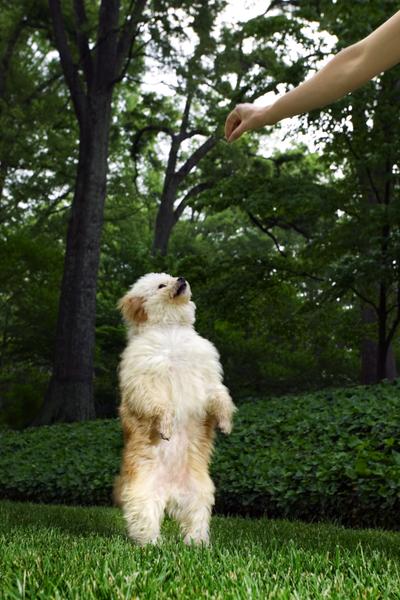
At the core of marker training is the knowledge that dogs will do what works to obtain the things they need. Food, water, attention, play and movement are just a few of these things. Using these resources as rewards, marker training motivates dogs to try different behaviors and skills until they find the one that works to obtain what they need or want. Because of this, we can teach dogs by focusing on the behaviors we like and rewarding them.
Removing the Confrontation
Marker training removes confrontation from the relationship between owner and dog. There is no use of force and no need to corner a dog into a response. Instead, marker training allows the dog to think independently and try new skills. Rather than control his dog’s every move, the owner can encourage the dog to make good choices. On occasion, trainers use a “no reward” marker to let the dog know the behavior was not worthy of a reward. Examples of no reward markers are phrases such as “wrong” or “try again” said in a relaxed, friendly tone to provide feedback, not to scold. However, removal of the reward, rather than introduction of the no reward, is often all that is needed to reduce an unwanted behavior.
Choosing a Marker
The most commonly used marker is the clicker, a small device with a metal tongue that makes a clicking sound when depressed and released. Speaking in more general terms, markers include words such as “yes!” and “good!” or short whistle bursts when working at long distances outdoors. When working with deaf dogs, many trainers have used vibration collars or laser pointers. Be careful with laser pointers, though, as these can excite dogs and trigger behavior problems. Whatever marker you choose, you must initially properly pair it with food treats so it has meaning to your dog. To do this, present the marker and immediately follow with a treat. Repeat until your dog is looking at you each time he hears the marker.
Consistent and Clear Communication
The biggest benefit to marker training is that it provides clear and consistent communication between owner and dog. Once the marker is charged, the dog knows that each mark means he gets a reward. Hence, this becomes an effective way for the owner to tell his dog which behaviors he likes. Using a camera analogy, each time the owner marks, the dog files a mental photo of what he did that earned that mark. And since dogs do what works, the dog will repeat behaviors that earn marks and abandon behaviors that do not.
Kathy Sdao’s SMART x 50
There is an easy method for applying marker training in daily life with your dog. Simply use the “SMART x 50” method developed by marine mammal and dog trainer Kathy Sdao. In her book, “Plenty in Life is Free,” Sdao describes how she developed this method for owners who did not have the time for formal, daily training sessions. SMART stands for See Mark And Reward Training. Count out 50 or more treats for each day. You can use part of your dog’s daily kibble if weight control is a concern. Then, each time your dog does something you like, for example going to his mat when the doorbell rings or sitting when approaching a stranger, mark happily with a word like “yes” or “good” and offer a treat. This method shifts your focus from what your dog is doing wrong to what your dog is doing right, and offers useful feedback to your dog as to what works.
Focusing on the Positive
Focusing on the positive builds a relationship based on trust, respect and fun with our dogs. No longer do we need to scare or physically harm our dogs in the name of training. Instead, guide your dog into making the right choices everyday, reward those choices with food or play and watch inappropriate behaviors disappear.


|
A New Free Course on Dog Grooming Reveals the Secret Step-by-Step Techniques used by the best Dog Groomers in the country!
Finally, You Can Now Groom your Dog on your own at home without having to hire an expensive groomer! |