

Jean Dodds Trailblazer for Veterinary Care

Veterinarian W. Jean Dodds, DVM, is an internationally recognized expert in hematology and immunology, but that description is superficial at best. Dodds has been an iconoclast ever since she applied to veterinary school in 1959, at a time when few women were encouraged to enter the profession.
After graduating with honors from Ontario Veterinary College, she went about changing the face of veterinary medicine in the areas of hematology, immunology, endocrinology, nutrition, holistic medicine and animal welfare.
She was a pioneer and leading voice in the effort to revise vaccination schedules and curb overvaccination of pets. She has earned a long list of honors, including being named Woman Veterinarian of the Year and Holistic Veterinarian of the Year.
Dodds is the founder of the Garden Grove, Calif.-based Hemopet, which is an animal blood bank, rescue and adoption center for retired racing Greyhounds, and a specialty veterinary diagnostic laboratory. Before being placed in adoptive homes, Hemopet’s Greyhound blood donors provide canine blood components, and the bank provides blood supplies and related services throughout North America.
At an age when most people are thinking of retirement, if they’re not already there, she is works tirelessly to help the profession and the animals she loves.
Q: Your father was a doctor and he came from a family of medical professionals. How did that influence your choice of profession, and what drew you to veterinary medicine instead, especially when that was, at the time, such a difficult profession for women to enter?
A: I guess the medical leaning was there because of my family background. Most of the women were nurses and the men were physicians, of course, but when I was finishing high school my father said, “You don’t want to be a vet. It’s not very scientific. You need to be a pediatrician if you don’t want your patients to talk to you.” I insisted. So he took me down to the Ontario Veterinary College when I was in grade 11 and it turned out it was the most modern veterinary school in the world at the time. Everything looked like a human hospital: green scrubbies and sterile surgery and everything.
Instead of turning me off veterinary medicine, it turned me onto veterinary medicine even more. I filled out an application to enter the school. You had to get perfect grades and of course I was so naive I didn’t even worry about that. Talk about chutzpah. I just thought, “Well, if I have to get perfect grades, I’ll get perfect grades.” I had to do farm experience because I was a city girl, so I worked two summers milking cows by hand in order to qualify to get into the college.
After my first year, I came home for the summer, and he started asking me, pointing to different parts of his body and saying, “What are the veins and nerves and arteries?” and of course I’d just done anatomy so I could reel it off, and he said, “And you learn all the differences between all the different species?” and I said yes, and he said, “Oh my god, it’s much more difficult than human medicine.”
Q: You established the first nonprofit national animal blood bank. What pricked your interest in veterinary transfusion medicine?
A: I was on the East Coast in Albany, N.Y. I was in charge of the human blood program for the state of New York right at the time when AIDS and blood safety and everything became so important. I was a hematologist by training anyway as a veterinarian, and so I had to manage the regulatory issues for blood transfusion safety in the state of New York, including New York City, and I was therefore attending the regional Red Cross meetings.
I was coming home one night from one of them and I thought, “Why don’t we have a similar kind of blood bank just for animals?” I decided (the logo) would be a heart-shaped life preserver, which I called Pet Lifeline, and then I had to think of a name for the company that was a little bit more formal and that’s how I came up with Hemopet.
Q: How did you first become interested in the science of immunology, and what made you think, “Hmmm, maybe we need to take a look at the frequency of vaccination?”
A: I think that when you’re in hematology, you’re also in immunology. The two specialties sort of go together. When I started studying immunology, I realized that one of the things that was causing, or that appeared to be causing, problems was the fact that the animals would crash hematologically and immunologically after they received vaccinations. I don’t mean anaphylaxis, but within three days to 30 days after vaccination, these animals were all coming up with weird blood and immune dysfunctional problems and that’s how I started looking at vaccinations and whether we should be giving as many as we do, especially when we don’t do that in people.
Q: You were a leader in promoting the idea of more limited and less frequent vaccinations, spotlighting serious health effects of overvaccination. What’s happening with that today, and who is leading the change, veterinarians or pet owners?
A: Both the pet-owning public and veterinarians are finally starting to seriously embrace the need for a more limited “core” vaccine approach, and less frequent vaccination boosters Ñ once the puppy or kitten has received an appropriate vaccination series. Vaccine titer testing is also becoming more accepted as an alternative to automatic adult booster vaccinations, except for rabies, which is generally required every three years by law.
Q: Dogs also can suffer severe adverse reactions from rabies vaccinations and you are at the forefront of efforts to show that a rabies vaccine is effective for at least five years, and possibly seven years. To promote this research you are one of the founders of the Rabies Challenge Fund, which raises money to cover the cost of a seven-year rabies vaccine challenge study, as well as to finance a study of adjuvants used in rabies vaccines and establish a rabies vaccine adverse reaction reporting system. How far along is the RCF?
A: It’s complicated. We’re in our sixth year of the five- and seven-year trials, so the five-year trial has finished. Ronald Schultz, PhD, is conducting those studies through the University of Wisconsin Foundation, although the animals are not there. Nobody in the study is paid other than the people who care for the animals, so we all volunteer our time, including Dr. Schultz and the University of Wisconsin.
What’s happened so far is we’ve got all the vaccine titers done serially throughout the challenge studies for the five-year trial. We have not yet released the information on these results. We’ve not done any actual viral challenges at this point. We’re looking at the vaccine titer results for the five years and following up from there.

A: When I started looking at the things that regulated the blood and the immune system, based on my background in hematology and immunology, I realized that a lot of it is controlled by the master glands of the body, namely the pituitary gland and the thyroid gland. Because we really can’t measure pituitary gland output efficiently, I decided, “Well, we have to then look at what the thyroid does to regulate the rest of the body as a master gland.”
When I started looking at that, not coming from that background, I had a broader, more wholistic perspective, and I think it allowed me to see that we really weren’t looking at this from the basis of breed differences or age differences or anything else.
Q: How did you develop your diagnostic assessment methods of thyroid function and the thyroid panel that you offer at your lab? Can you explain the technology behind the diagnostics and lab tests?
A: We have four patents on our novel “green” thyroid testing. We’re the only lab that uses only nonradioisotopic methods for measuring the complete thyroid antibody profile using novel methodology. Although some similar assays are available at other labs in the U.S. and Canada, the technology that we use is a trade secret and does not come from North America.
My commitment was if we were going to start our own in-house laboratory for specialty testing, we’re not going to use isotopes. I did not want to bring them into the lab because of the environmental concerns, so we developed this technology over a period of time and then we started our own testing in this niche specialty in 2009. We also are the only lab that uses a cumulative age- and breed-specific database to interpret our results based on the age and breed type of the animal being tested.
Q: Do you think autoimmune thyroiditis is more common than it used to be, or are we just better at diagnosing it? What are some of the early signs that owners and veterinarians should be aware of?
A: Basically, both answers are correct. We are more aware now of the need to test for thyroiditis, particularly among the purebred dogs that are being used for breeding that are commonly affected. We’ve got 25 to 50 breeds that have a relatively high frequency of this condition. We also know that thyroid testing today is better than it used to be because we didnÕt have the thyroid autoantibody tests that we have now to look for thyroiditis.
The most important early clinical signs are unusual weight gain (despite) normal intake of food and behavioral aggression or weird behaviors: the animal becomes suddenly submissive, or it becomes wholly different in behavior. This can happen around puberty anywhere between, we’ve seen 7 months but typically 10 months to 11/2 years, which is much earlier than we used to see hypothyroidism a decade ago. Probably partly because of the environmental changes we have with the chemicals and the depletion of the ozone layer, overvaccination issues, overuse of pesticides on lawns and shrubs and bushes.
The most important thing for the clinical veterinarian is that — and this is not taught in my view accurately at the veterinary school level or the continuing education credit level — veterinarians are looking for fat and lazy hate-the-cold dogs with bad skin and coat. That only occurs after 70 percent of the thyroid gland or more has been damaged. We’re not taught to look for the early clinical and behavioral signs of thyroid dysfunction that present prior to the eventual 70 percent destruction of thyroid output and its attendant classical clinical signs.
Q: One of your other interests is nutrigenomics. Can you talk a little bit about what that is and what changes we might see in pet foods in the future?
A: Nutrigenomics is a relatively new term that was coined around 2002. (It explains) that certain foods can change the expression of one’s genes, whether you’re a person or an animal, and that each individual person or animal has what we call a molecular dietary signature. There are specific foods that that individual should eat to promote health and well-being and to prevent chronic disease. Nutrigenomics basically is the concept of individualized functional foods.

Q: What are some of the other new diagnostics and technologies that you are excited about or involved with?
A: Well, the only new thing that we’ve done, and we’ve done it now for about 18 months, is Nutriscan, which is our salivary test for food sensitivity and intolerance. It’s the only one available in the world for animals. We (have it for dogs); we will be starting with cats sometime soon, and next year if things go as planned, we’ll be doing the horse.
We’ve done about 4,000 Nutriscan tests. It’s very easy because the sample is stable for 30 days, so people from all over the world are doing the tests and sending us samples (in the mail), so much so that we’re actually talking about building out a part of our laboratory now to make a special facility to automate the technology here because it’s very labor-intensive. So we now have 24 foods in our test profile. The results are just amazing, totally amazing.
Q: Can you share one or two examples?
A: One example was a Leonberger that had suffered from chronic diarrhea for four years, despite frequent dietary changes and therapy. After running the Nutriscan testing, the offending food intolerances were identified and eliminated from his diet. Within three days and ever since then, his bowel movements have been completely normal.
In a second case, the dog was constantly scratching and itching in a frantic manner for several months, and would keep the owners up at night. After Nutriscan testing, the only reacting foods were quinoa and salmon. When I related that to the owner, she was amazed because she had been baking quinoa and salmon cookies for the dog as treats! Eliminating these treats solved the itching.
Q: Over the years, your work has been very controversial. When I wrote about vaccinations a few years ago, I remember getting an angry letter from a veterinarian wanting to know why I would quote someone who wasn’t even an immunologist. Leaving aside the fact that veterinary medicine doesn’t have an immunology specialty, how do you respond to those people, and why do you think you make them so angry?
A: We still have many arrows in our backs, Ron Schultz and I. They pass us by now because there’s no room. We laugh about that. But you know, we were talking years before the concept of overvaccination even became acknowledged. What really changed the industry was when cats got tumors at the vaccine injection site and then dogs did also. Even though we’ve known long before that about the adverse reactions that can occur, that really galvanized the veterinary medicine throughout the world to realize that vaccines were not sterile water and that they could stimulate a lot of immunologically challenging conditions.
I think maybe, you know, people don’t like change. It’s the same thing in human medicine. I would be just as controversial if I was a physician. That’s because I’m challenging people to look beyond the envelope. When you do that, if you get highly visible, as I am today, even people who don’t understand, don’t know who you are, immediately don’t feel comfortable with trying to change what they think isn’t broken. We tell people, “Please don’t be upset if you were doing things 20 years ago or even 10 years ago that are no longer considered the best thing to do in medical care for animals today. It’s not your fault we didn’t know about it. Now that we know about it, let’s move forward and change.”
Tarry or Bloody Stool in Dogs

Everyone loves candy and on Halloween candy is everywhere. While your dog may have never been tempted by sweet treats before, keep in mind that candy probably has never been so accessible! On Halloween candy can be found in bowls, on tables, next to doors, in trick or treat bags being carried at dog level and in the hands of small children who might think your dog would like to share the snack. Candy also makes it onto the floor when spilled during the handout or dumped out for the all-important candy sort.
Spooky Sugar and Frightful Fats
While not all candy is specifically poisonous to dogs, it does contain large amounts of sugar and fat. The ingestion of large amounts of either can lead to pancreatitis in dogs.
Chocolate Nightmares
Present in a substantial amount of Halloween goodies, chocolate is highly poisonous to dogs even in small amounts (learn more about dogs and chocolate) and should never be shared with your pet.
Wrathful Wrappers
While wrappers are of no interest to humans and often end up scattered on tables and floors, they can look like a delightful snack to your four legged friend. While they might be empty and free of candy, wrappers can actually be as dangerous or even more dangerous than the candy itself. Foil and cellophane can cause life-threatening bowel obstructions, which may require surgery.
Repulsive Raisins
While you might be thrilled to see a healthy treat in Halloween goody bags — beware! Some people switch out the usual candy for a healthy snack of trail mix or raisins. While healthy for humans, raisins are highly toxic to dogs and can cause kidney failure.
Human Halloween Costumes
While you might not think your own costume has anything to do with your dog, there are a few things you should keep in mind.
Halloween costumes, especially children’s costumes, often include small parts and unusual materials that may resemble your dog’s toys or chew toys. They might even make unusual and tempting noises. Be careful not to leave the costume unattended and beware of any loose pieces that may become a doggie disaster.
Glow sticks and glow jewelry are a good way to keep your child visable, but could look like a toy/stick to your dog. If your child is carrying a glow stick, remind them that they should not wave it around in front of the dog. Chewing on glow sticks can cause your dog mouth pain, irritation and drooling and ingesting a glow stick can cause intestinal blockage.
Dog Halloween Costumes
While some dogs might like being dressed up, it’s wise to experiment first to see if a pet likes to be in clothing. When choosing your dog’s Halloween costume, remember these tips:
When selecting a Halloween costume for your dog, make sure that it fits well. A costume that is too restrictive or too loose could cause harm to your dog. Take time to acclimate your dog to the costume prior to the big day.
Make sure pet costumes do not limit an animal’s movement, hearing, sight or ability to breathe or bark. Also check the costume for choking hazards.
For dogs that don’t like cosutmes, a Halloween collar, leash or bandana can be just as festive.
Halloween Decorations
Decorations are a regular part of Halloween fun, but some can pose a safety hazard to your dog and your home. Use fake cobwebs sparingly outdoors. These may adversely affect pets and wildlife. As with any holiday decoration, don’t let pets chew or eat items like crepe paper streamers or tinsel – these can discolor your pet’s mouth, cause upset stomach, choking and intestinal blockage.
Pumpkins and Jack-O-Lanterns
While many people feed small amounts of pumpkin to their dogs for health purposes, there is a big difference between cooked and pureed “food-friendly” pumpkin, and decorative, raw pumpkins.
Dogs should never eat the shell of a pumpkin or gourd, but during the fall season, many decorative pumpkins and gourds are coated with materials, such as glue, glitter or shellac that can be toxic to your pet.
Once Halloween is over, ditch the carved pumpkins. They can become dangerous as they may deteriorate and grow mold over time.
Re-think placing candles in Jack-O-Lanterns. Pets can easily knock them over and start a fire. There are many great battery-operated alternatives to light up your pumpkin that last longer and are safer for everyone!
Stress Free Halloween
Although it is tempting to include your dog in the festivities, sometimes the best option for everyone is to keep the dog away from the festivities all together. Halloween can be a scary and stressful time for your dog. Halloween is synonymous with spooky music, strange noises, creepy decorations and holiday pranks. The yells and screams of trick-or-treaters, doorbells ringing and a parade of costumed strangers at the door might all be in good fun, but your dog probably doesn’t know that.
Keep your dog inside. The late night commotion might cause your dog to spook and flee.
Take your dog on a long walk before Halloween night. This will help with anxiety and get them ready for an early bed time.
Create a quiet and comfortable room for your dog that will not have people going in and out of it. Consider playing music to drown out strange noises.
If you aren’t going to be home for trick-or-treaters, turn off the lights in the house so people will be less likely to knock.
Dog DNA and Humans
Then came Darwin, Mendel, and Watson and Crick. The last century has seen more changes in dog breeding than the past 10 centuries combined. In the 20th century, researchers such as Stockard, Warner and Humphries, and Scott and Fuller undertook hundreds, if not thousands, of experimental crosses. But by the last quarter of the 20th century, large-scale dog genetic projects were gone, largely because dog-breeding studies took too much time, space and money.
A few researchers maintained small genetic projects. Gregory Acland and Gustavo Aguirre were searching for answers to progressive retinal atrophy (PRA) inheritance in dogs. Their pedigree analyses and crosses between breeds showed that several types of PRA existed, most of which were recessively inherited. Breeders clamored for some way to identify carriers, but without information about the dog genome, finding the gene and devising a DNA test was only a dream.
That dream started to materialize when Jasper Rind, a yeast geneticist, became interested in the inheritance of canine behaviors such as herding and swimming and ran into the same roadblock as Acland and Aguirre. But Rind was acquainted with the process of building genetic marker maps, so he assigned his post doc, Elaine Ostrander, to the task of building one for the dog.
Pressing forward
The project began slowly but got a boost in 1996 when Ostrander joined forces with Acland and Aguirre, giving her access to their samples and pedigrees. Their combined efforts produced the first rough map of the dog genome, with 150 markers. It didn’t pinpoint the gene for PRA, but it narrowed down its location to one chromosome.
Funding was still scarce because mice, not dogs, were the accepted animal model for human hereditary disease. That changed in 1998, when researchers discovered the mutation causing narcolepsy in Dobermans. Human narcolepsy researchers used the information from the narcoleptic dogs to better understand the process in people, something mouse research hadn’t provided. If dog genetic research was applicable in this case, why wouldn’t it be applicable in others?
In fact, dogs make ideal candidates for genetic research that can help people. They share many of the same diseases and environmental risk factors as humans, and they have highly distinctive breeds with distinct disease predispositions. Some breeds have been essentially inbred for hundreds of generations, and most dogs come with generations of known pedigrees. These reasons, among others, convinced the National Institute of Health to provide the funding needed to create a complete genome map of the dog.
It was completed ahead of schedule, and as technologies improved, maps based on other dogs were added in a fraction of the time the first map took. By comparing sequences from several dog breeds, researchers have identified 2.5 million places on the genome where changes in a single nucleotide frequency often occur, accounting for the variation we see in dogs. These single nucleotide polymorphisms (SNPs) may soon be available in a public database called “CANMAP.”
Because dogs are more inbred than people, finding individual genes responsible for a disorder is comparatively easy. Generations of inbreeding result in sections consisting of millions of bases of identical DNA within a breed, as compared to only tens of thousands in people. And because breeds descend from only a few founders, a hereditary disorder found in a breed tends to arise from the same mutation in every affected member of that breed. This differs from the case in people, or even mixed breeds, in which it’s possible for diseases that look the same to be caused by different mutations.
By comparing genetic maps from different breeds, researchers estimate how closely breeds are related to one another. This makes it easier to home in on mutations for diseases shared by related breeds because such mutations probably come from the same founding stock. When a similar-appearing disorder occurs in a distantly related breed, it’s more likely to arise from separate mutations. Collie Eye Anomaly, for example, occurs in several related herding breeds. This made it easier for researchers to narrow down the candidate genes to only a few that were shared by four different related breeds with the disorder.
Human-canine DNA
Which brings us back to the gene for PRA. At first glance, dogs with PRA seem to have the same disorder. But Acland and Aguirre’s early research had shown that different breeds get different types of PRA. The gene for the most widespread form of PRA, progressive rod-cone degeneration (prcd), was among the first genetic mutations located in the dog. Since then, DNA tests have been developed for many canine hereditary diseases, including other types of PRA, von Willebrand’s disease, cystinuria, and others. Of course, some tests don’t quite make the list of Nobel Prize eligibility, but they’re still useful – and popular. In fact, some ongoing research is now aimed at finding genes associated with normal conformation differences such as skull and limb length and hair types.
In a few recent studies, the use of SNPs allowed the researchers to pinpoint target genes using just a handful of dogs. In one case, fewer than two dozen dogs were needed to track down the mutation responsible for white coat color in Boxers. It turns out that white Boxers really are different from your average white dog. The white is caused by the same mutation found in people with Waardenburg syndrome, which causes pigment abnormalities and hearing loss. The ability to use just a few dogs to find mutations opens the door for mapping less widespread conditions.
Success is often measured by funding. The AKC Canine Health Foundation and the Morris Animal Foundation both continue to fund genetic studies. Both organizations recently contributed to the $2.2 million needed for startup funds for the Pfizer Canine Comparative Oncology and Genomics Consortium (Pfizer contributed more than $1 million), which is gearing up to collect tissues and fluids from 3,000 dogs over the next three years. And thanks to a grant for $16 million, European researchers have recently organized LUPA, a consortium of 20 universities. They plan to gather DNA samples and health histories from 8,000 dogs, using the data to look for genes for 18 diseases.
Dog Health Problems Related to Grooming Products
Skin Irritants
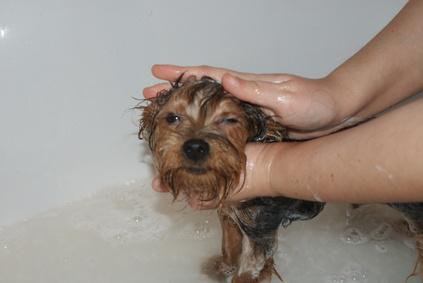
Symptoms of skin problems due to a shampoo allergy include excessive scratching or licking, scabs, hot spots, scaly patches and flaky skin. Like people, dogs’ skin carries natural oils that shampoos can strip. Discontinuation of the offending products will usually stop the allergic reaction. Be certain to use products meant for dogs, rather than human shampoos, as dogs’ skin has a much higher pH level than humans’. Hypoallergenic shampoos are available from groomers and pet supply stores. In addition, veterinarians have prescription shampoos for dogs with severe allergies.
Cancer Threat
Some dog shampoos have strong ingredients including toluene, butyl acetate and ethyl acetate. For example, butyl acetate is a chemical solvent that serves as a foaming agent and is also used in upholstery shampoo and nail polish. These ingredients are thought to contribute to organ problems and an increased cancer rate in laboratory animals and humans. Read the label to find shampoos with less caustic ingredients. Hypoallergenic shampoos and natural-formula shampoos can be found at pet supply stores and from groomers.
Clipping Too Close
A dog’s skin can become irritated if it is clipped too close or if the clippers get too hot and burn the skin. Scabs can appear and the skin can become blotchy, usually clearing up on its own within a week. The skin can be treated with antibiotics if the irritation is severe and persistent.
Health Problems for Dog Groomers
On that proverbial other side of the coin, people who groom dogs can face health problems. These typically stem from daily exposure to chemicals, disinfectants and pesticides in some grooming products and manifest themselves as skin allergies and other maladies. In addition, some dog parasites can be transmitted to groomers. Treatment depends on the exact cause of the problem and often involves changing the dog shampoo and other grooming products used.
Dog Heatstroke Survival Guide
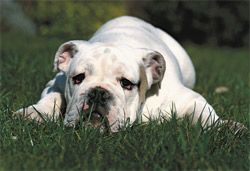
When my Pharaoh Hound, Logan, joined the family, I had the opportunity to try dog sports I had not yet experienced. It started out innocently enough with conformation events, but while working on conformation, I decided to try Logan in lure coursing. Logan turned out to be a natural, and has been awarded multiple Best-in-Field titles.
Agility, disc-dog competition, conformation and lure coursing are offered year-round, rain or shine. About a month ago, I experienced a problem I had never encountered. For the first time in almost a decade of competing in dog sports, one of my dogs experienced heatstroke. At a lure-coursing event, Logan became overheated. He’s completely recovered now, with no apparent long-term negative effects, but it was an experience that demonstrated firsthand how quickly this potentially life-threatening condition can arise.
What is heatstroke?
In simple terms, heatstroke occurs when a dog loses its natural ability to regulate its body temperature. Dogs don’t sweat all over their bodies the way humans do. Canine body temperature is primarily regulated through respiration (i.e., panting). If a dog’s respiratory tract cannot evacuate heat quickly enough, heatstroke can occur.
To know whether or not your dog is suffering from heatstroke (as opposed to merely heat exposure), it’s important to know the signs of heatstroke.
A dog’s normal resting temperature is about 100.5 to 102.5 degrees Fahrenheit. Once a dog’s temperature rises above 105 degrees, physiological changes start to take place, and the dog begins to experience the effects of heatstroke. At 106 to 108 degrees, the dog begins to suffer irreversible damage to the kidneys, liver, gastrointestinal tract, heart and brain.
If a dog is experiencing heatstroke, you may observe excessive panting; hyperventilation; increased salivation; dry gums that become pale, grayish and tacky; rapid or erratic pulse; weakness; confusion; inattention; vomiting; diarrhea; and possible rectal bleeding. If the dog continues to overheat, breathing efforts become slowed or absent, and finally, seizures or coma can occur.
The amount of damage a dog sustains when stricken with heatstroke depends on the magnitude and duration of the exposure. The longer and more severe the exposure, the worse the damage will be.
What to do:
Pay attention to your dog. Recognizing the symptoms of heatstroke and responding quickly is essential for the best possible outcome.
Get into the shade. If you think your dog is suffering from heatstroke, move it into a shaded area and out of direct sunlight. Apply cool water to the inner thighs and stomach of the dog, where there’s a higher concentration of relatively superficial, large blood vessels. Apply cool water to the foot pads, as well.
Use running water. A faucet or hose is the best way to wet down your dog’s body. Never submerge your dog in water, such as in a pool or tub – this could cool the dog too rapidly, leading to further complications, including cardiac arrest and bloating.
Use cool – not cold – water. Many people make the mistake of using cold water or ice to cool the dog. When faced with a dog suffering from heatstroke, remember that the goal is to cool the dog. Using ice or extremely cold water is actually counterproductive to this process because ice and cold water cause the blood vessels to constrict, which slows blood flow, thus slowing the cooling process.
Don’t cover the dog. One of the keys to successfully cooling your dog is ensuring the water being placed on the dog can evaporate. Never cover an overheated dog with a wet towel or blanket. This inhibits evaporation and creates a sauna effect around your dog’s body. Likewise, don’t wet the dog down and put it into an enclosed area, such as a kennel. Any air flow during the cooling process is helpful in reducing the dog’s body temperature. Sitting with the wet dog in a running car with the air conditioner blowing is an ideal cooling situation.
Keep the dog moving. It’s important to try to encourage your dog to stand or walk slowly as it cools down. This is because the circulating blood tends to pool in certain areas if the dog is lying down, thus preventing the cooled blood from circulating back to the core.
Allow the dog to drink small amounts of water. Cooling the dog is the first priority. Hydration is the next. Don’t allow the dog to gulp water. Instead, offer small amounts of water that’s cool, but not cold. If the dog drinks too much water too rapidly, it could lead to vomiting or bloat.
Avoid giving human performance drinks. Performance beverages designed for humans are not recommended because they are not formulated with the canine’s physiology in mind. If you can’t get an overheated dog to drink water, try offering chicken- or beef-based broths.


|
A New Free Course on Dog Grooming Reveals the Secret Step-by-Step Techniques used by the best Dog Groomers in the country!
Finally, You Can Now Groom your Dog on your own at home without having to hire an expensive groomer! |