

How to Take Care of Old Dogs for Quality of Life
Feeding
You might want to switch your dog to a special diet formulated for senior canines. It’s important to prevent Fido from becoming fat. Obesity isn’t healthy at any age, but it’s a condition that less-active senior dogs consuming the same amount of food they did in their prime can easily develop. Talk to your vet about your dog’s diet and any special nutritional requirements he might have.
Preventive Care
If you’re lucky, your senior dog is healthy and you want to keep him that way. That might mean taking him to the vet more often than his once-a-year checkup. According to the American Animal Hospital Association, older dogs “in the last 25 percent of the predicted life span for their breed” should optimally have an examination about every six months. Your vet monitors your dog’s weight, inspects him for any arthritic changes and examines his skin for any lumps or bumps. Regular blood, thyroid, fecal and urine tests alert your vet to any changes requiring further investigation. Tell your vet about any changes you’ve noticed in your dog’s behavior, even if it seems minor to you.
Supplements
While your vet prescribes any necessary medication for your old dog, some over-the-counter supplements may improve his quality of life if he shows certain arthritic changes. Supplements for dogs containing glucosamine, chondroitin sulfate and methyl-sufonyl-methane may slow down the cartilage breakdown that is the essence of arthritis. While these supplements might help put a spring back in his step, always check with your vet before giving your dog any over-the-counter treatment.
Exercise
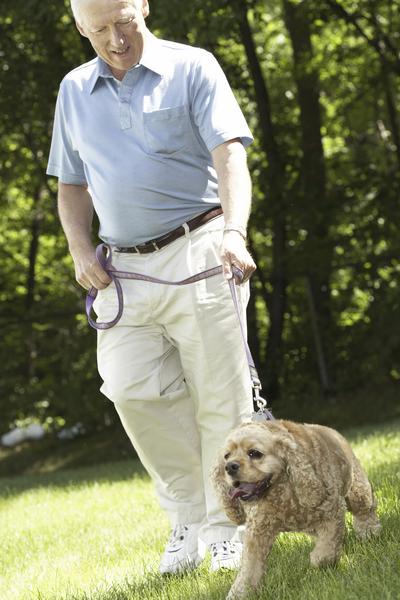
Even if your dog develops a little hitch in his get-along, he still needs exercise. Regular exercise keeps joints mobile, but his activity level probably isn’t what it once was. Instead of going for runs, take him for walks. Maybe he isn’t up for a half-hour spin around the neighborhood every day, but 15 minutes or so might suit him just fine.
Making Adjustments
Maybe Fido can’t get up and down the stairs as easily as he once did. If you allow him on the furniture, it might be tough for him to climb onto a chair, sofa or bed. You can purchase or build ramps to help him get where he wants to go more easily. If he can’t navigate the stairs to the places he once slept, provide a convenient new sleeping area for him.
What Health Conditions are English Spaniels Prone to?

Eye Conditions
English spaniels are prone to progressive retinal atrophy, a type of inherited degenerative condition that can result in diminished vision or blindness. While it primarily impacts middle-aged dogs, even dogs as young as 2 years old can develop the disorder. According to the English Springer Spaniel Club, this breed also may develop glaucoma in one or both eyes. Depending on the severity of the condition, the dog can lose its eyesight or even lose an eye as a result. Cataracts and retinal dysplasia also can develop in this breed. Regular eye exams can help identify potential problems and address them early to reduce the potential for pain and vision loss.
Inherited Diseases
Canine fucosidosis is an inherited disease of the nervous system that can be fatal if not identified and treated quickly. The English Springer Spaniel Club indicates this disease is most commonly found in young dogs and includes symptoms such as loss of coordination, problems with vision and hearing and digestive issues. The condition is caused by the missing enzyme alpha-L-fucosidase. Genetic testing is available to determine if your pup has the potential for this disorder.
Hip Dysplasia
English spaniels may be subject to the joint condition hip dysplasia. Symptoms include lameness in hind legs, a tendency to be slow to stand or hopping when running or walking. Hip dysplasia, left undiagnosed and untreated, can lead to a painful arthritic condition and severely limit movement. According to the Baker Institute of Animal Health, your vet can identify the disease through X-rays. The symptoms of the disorder can be minimized through pain relief and treatment with joint-lubricating supplements.
Epileptic Symptoms
Epilepsy can occur in English spaniels. Dogs of this breed who contract the disorder usually exhibit symptoms in the first three years of life. According to the English Springer Spaniel Field Trial Association, the condition is characterized by repeated seizures and often is confused with other neurological and health conditions. English spaniels also are prone to canine autoimmune disease, which can exacerbate various forms of epilepsy, so proper diagnosis is essential to effective treatment.


|
A New Free Course on Dog Grooming Reveals the Secret Step-by-Step Techniques used by the best Dog Groomers in the country!
Finally, You Can Now Groom your Dog on your own at home without having to hire an expensive groomer! |