

Dog-Friendly Vacations That Will Make You Feel Like an Excellent Person
Earth Day might have you thinking how you can make a difference. While it’s always good to fit being green into your daily routine, have you ever considered a green vacation? Most people look at vacations as a way to escape their day-to-day and indulge, but what if there was a way to relax and give back all at the same time?
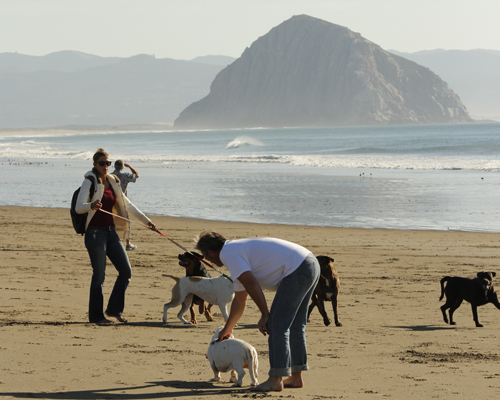
“Stewardship Travel offers visitors a lighter touch than a high intensity volunteer vacation,” explains Stewardship Travel Director and Diane Strachan. “For instance, WineCoastCountry’s Stewardship Travelers can pair a luxury spa visit with a brief dog friendly beach clean-up, followed by wine tasting from a Stewardship Traveler vintner that invites dogs, fine dining (without your dog) and a donation to the Pacific Wildlife Care Foundation.”
This mix means you can pamper yourself, your dog, and mother Earth at the same time – what could be better?
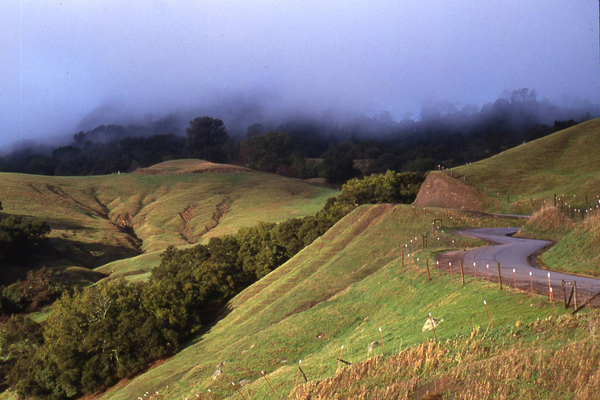
Each offers activities where dogs are invited to join their owner in demonstrating their philanthropic side:
Avila Beach and Valley – Stewardship Traveler dogs (especially retrievers!) and their owners can visit Avila Beach and pick up a Stewardship Beach Cleanup Kit at participating lodging properties to look for flotsam, jetsam, and plastic litter harmful to wildlife (best to explore the beach after storms). Avila has a special dog run beach north of town. Dogs are also welcome on the public beach before 10 a.m. and after 5 p.m.
Cayucos – Stewardship Traveler Dogs may accompany Stewardship Traveler owners on the dog friendly beach in Cayucos and help pick up the poop left behind my not so caring dog owners. Often times good intentioned people forget their green bagged dog poop on the beach. Poop bags are to be found at almost every beach access point in Cayucos.
Lopez Lake Recreation Area – Leashed pooches can join their guardians at one of the top choices for camping and leisure trips featuring 22 miles of shoreline, there’s something for everyone: camping, fishing, boating, skiing, sailing, windsurfing, picnicking, hiking, equestrian trails, mountain biking, canoeing, bird watching, hanging out with your dog, and so much more. Dogs cannot swim in the lake but can take the natural history boat cruise.
Pismo State Beach – From late October to February, leashed dogs and their guardians can marvel as thousands of black and gold Monarch butterflies cluster in the limbs of a Eucalyptus grove at Pismo State Beach, providing an amazing glimpse of nature in all her vibrant glory. This colony, easily accessible from Highway 1, is one of the largest in the nation, hosting an average of 50,000 butterflies every year.
San Luis Obispo Botanical Garden – Leashed canines are invited to the Botanical Gardens (although not during activities or events.) Featuring the diverse plant life of the Mediterranean climate zones of the world, this Botanical Garden provides opportunities for education, recreation, conservation and research. Through special programs and facilities, the Garden fosters an appreciation and understanding of the relationship between people and nature, and encourages a sense of stewardship toward the environment.
Take Your Dog To Work Day: Tips, Tricks and Essential Advice
This year marks the 15th Pet Sitters International’s Take Your Dog To Work Day. The day was created to celebrate canine companionship and boost adoptions. While we all know it’s fun to be able to take your dog to work instead of leaving them behind one day of the year (unless you are lucky enough to work for a company that welcomes pets year round) the day can also cause accidents, especially if you have non-dog savvy workers or a fearful pup.
15 Tips for a Successful Take Your Dog to Work Day
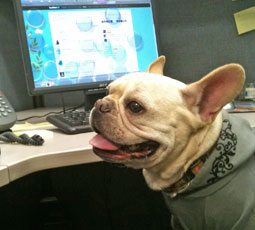
Bathe and groom your dog before her office debut so she is clean and odor-free, and free of any parasites such as fleas or ticks.
Only allow dogs to visit the office who are up-to-date on vaccines, and never bring your dog if he appears sick.
If your dog is aggressive or overly shy, keep him at home. Meeting new dogs and people in an unfamiliar environment can be too stressful for some dogs.
Bring with you everything your dog might need, including food, treats, bowls, toys, and a leash. And don’t forget paper towels, clean-up bags, and pet-safe disinfectant.
To keep your dog comfortable, consider bringing a crate, especially if you are routinely in and out of your office workspace.
Designate an appropriate area where dogs can relieve themselves and stress that people need to pick up after their dogs.
Avoid forcing co-workers to interact with your dog. Those who are interested will seek out you and your dog.
Monitor the amount of treats your pet eats, and educate co-workers ahead of time about what is and isn’t safe for dogs. Bring extra food or treats that your dog is used to that people can safely feed your dog.
Have an exit strategy. It’s OK to take him home at anytime if he is uncomfortable or boisterous and causing a distraction.
Remember that the point of TYDTWD – aside from having fun – is to educate people about pet adoption and helping pets in need.
If your office is closed on Friday or employees are interested in bringing other pets, consider celebrating on another day during Take Your Dog to Work Week, June 16-20, 2014. Or any other time of the year!
Ask your local shelter or rescue group to join your TYDTWD event. They can bring adoptable pets or information about local adoption opportunities and you can hold a fundraiser to benefit the guest shelter.
Take lots of pictures, and share them on your company’s website or social media pages. You could also have a photo contest or award prizes for cutest dog or best owner-dog look-a-likes.
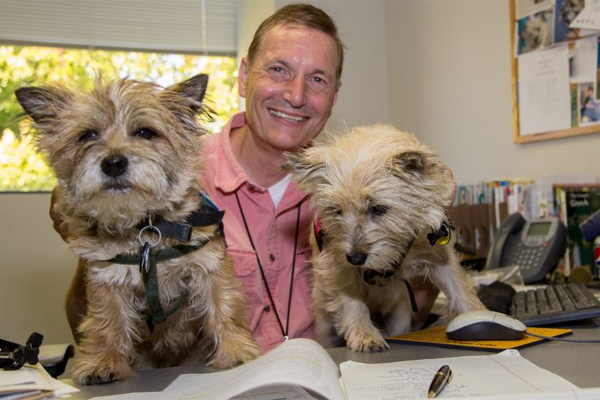
7 Rules Everyone in the Office Should Follow for Take Your Dog to Work Day
Have a great Take Your Dog to Work Day by following these rules! If you have any questions, always ask your co-worker first before say hi to their dog.
Never approach another co-worker’s dog with your dog, it may not be dog-friendly
Always ask your co-worker before you greet the dog
Always approach a dog from the side, do not stare directly at the dog’s face, and do not reach over the dog’s head
Do not approach a dog that a co-worker has left alone in their office
Do not feed a dog without permission (she may have allergies)
Avoid coming up behind a dog, it can startle him
Avoid bending over a dog. Instead, kneel by their side
If you know your dog is shy of people, tie a yellow ribbon on his leash and collar for the day, so the rest of the office will know.
If you see a yellow ribbon on a dog, the best thing to do is ignore him. Even if he comes up and sniffs you. Just because he is checking you out to see if you are a threat, does not mean they want you pet him.
Look for these signs and stop approaching the dog if you see any of them, even if the owner is telling you the dog is friendly. All of these are signs the dog is uncomfortable and may bite if pushed.
Whites of the eyes
Cowered, low body posture
Tail low-set and/or tucked (for breed)
Ears low or back
Piloerection (hair along back and neck raised)
High tail set (for breed) with a slow or very rapid wag
Freezing
Backing away
Hiding behind owner or furniture
Baring of teeth
Growling, barking
Lunging
Use your best judgment and err on the side of caution. If you are unsure, it’s best to just not pet the dog.
Working Like a Dog Beyond the Office
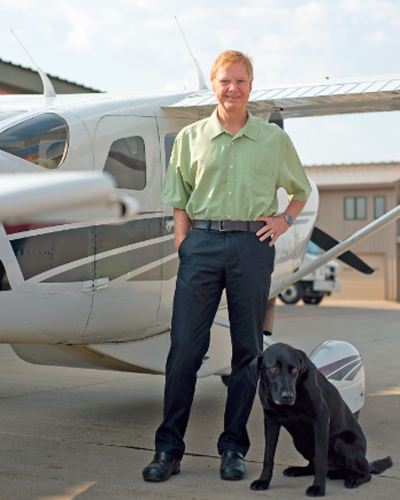
The most rewarding part, he says, is the follow-up photographs when he sees the puppies that are in the arms of the children with their big smiles and new families. “It’s a win-win situation,” Rork says. “I feel like Santa Claus with my sleigh every time I taxi away with the dogs.”
But unlike that other legendary flyer, it’s not a bright-red-nosed Rudolph at the helm of Rork’s “sleigh.” Rather, the cockpit’s shotgun seat — and the sidekick duties — belong to his wet-nosed “co-pilot” Doyle.
Since Dog Is My CoPilot was founded, Rork and Doyle have logged more than 400 hours, and just this past February, they flew their 1,000th dog to safety. All that flying gives Rork plenty of quality time to spend with his canine pal. “He just curls right up and does fine,” he says, adding that dogs, like people, adjust to the altitude without issue.
“I like the company,” Rork says. “He’s my best friend. We’re really a team, and Doyle truly is my co-pilot.”
Working Overtime with Canines
Rork certainly isn’t alone; many workers report having better days when they’re allowed to work alongside their canine companions. A recent study by Virginia Commonwealth University found that employees who brought their dogs to work experienced a reduction in stress level scores of about 11 percent during the workday, while workers who didn’t bring their dogs experienced up to a 70 percent increase in those same stress-level scores.
Dogs also help us interact better with one another, an important attribute even — and maybe especially — in high-intensity workplaces. “Dogs have a way of softening the environment,” says Alan Beck, Sc.D., director of the Center for the Human-Animal Bond at the Purdue University College of Veterinary Medicine in West Lafayette, Ind. “So if you’re having a meeting, a dog gives a focus of attention and takes some of the pressure off. You now have something common to talk about besides how much you’re charging me, or why you want this raise, or why a particular law won’t work.”
That’s how it is for U.S. Rep. Ken Calvert of California’s 42nd District, who brings his 6-year-old MiniatureDachshund Cali to work on Capitol Hill every day.
“Sometimes, you know, people come in here that may not agree with me,” Calvert says. “Almost everybody loves dogs, so Cali takes the edge off.”
Calvert remembers a specific time when a four-star general came into his office to discuss serious business. “Cali just launched into the office and jumped on top of him and started licking his face,” he says. “He had to smile at that. I could tell he loved dogs, too, so we knew he was a good guy.”
As chairman of the Interior, Environment, and Related Agencies Subcommittee and a member of several other congressional committees, pressure often looms large for Calvert. Having Cali around, he says, provides some relief. On a typical day, Cali can be found springing onto the laps of staffers and roving from bed to bed — both Calvert’s Legislative Director Rebecca Keightley and Deputy Chief of Staff Tricia Evans keep dog beds by their desks and dispense a hearty amount of treats. During the workday, Cali has free rein, often hopping up on Calvert’s couch to play or nap, or propping herself right up on his desk to, as Calvert puts it, “help with paperwork.”
Less Stress, More Wags
Having dogs around also provides physical benefits. That’s certainly the case for Matthew Offord, a Conservative Member of Parliament for Hendon, a suburb of northwest London. While he spends many of his days out meeting his constituents, on office days, Offord often brings his 3-year-old Jack Russell Terrier Max to work. Offord’s workplace isn’t quite as open to dogs as is the U.S. Congress. “Dogs, except guide dogs, are not generally allowed in the Palace of Westminster, but one or two slip through,” he says.
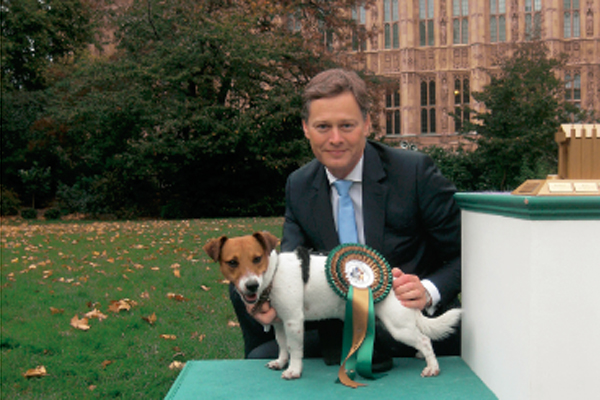
“Taking him for a quick walk also offers an opportunity to get away from sitting at a desk to get a bit of exercise,” he says, “both for me and my staff, who enjoy taking him for walks if I am in the chamber or a meeting.”
For Offord, there are social benefits, too. “When I am out in the constituency, Max often acts as an icebreaker,” he says. “I think some people feel a lot more comfortable when they can share stories with me about their dogs as well. He’s a particular favorite with the children at a residential care home, who sometimes find it easier to communicate with Max than the adults around them.”
Four-Legged Counselors
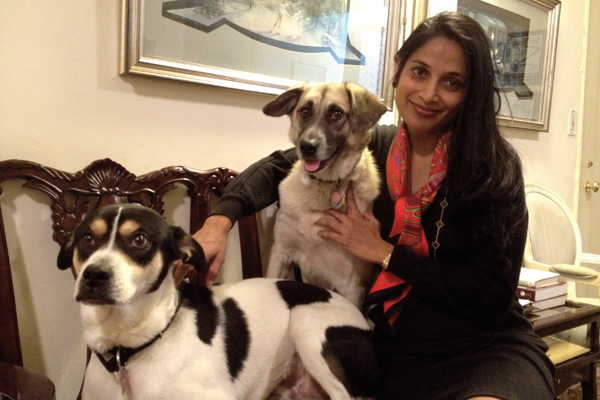
The uncanny ability of dogs to help people interact with one another and relax in stressful situations is one of the many reasons neurologist Gayatri Devi, M.D., director of New York Memory Services in New York City, brings her 4.5-year-old German Shepherd Dog mix Lola and her 5-year-old Boxer mix Gage to work with her each day. “I think the idea of a dog in a doctor’s office is unusual,” she says. “But they make the patients feel better. … Kids, if they’re afraid to be in the doctor’s office, they will see the dogs, get excited, and forget where they are. People with dementia who are nervous when they come in the office, they become so busy petting the dogs they are not as concerned or worried anymore. For the most part, just seeing the animals, it’s such a calming influence.”
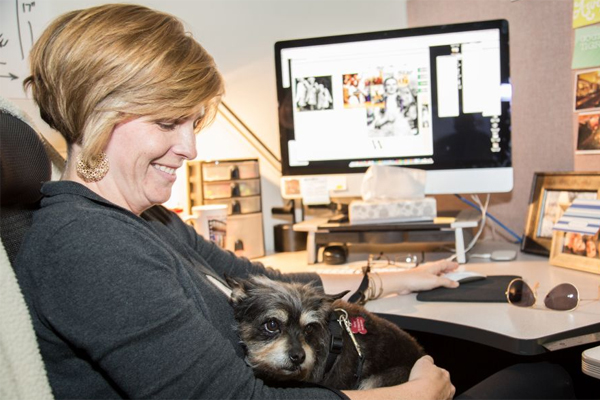
When it comes to the firm’s 14 other staff members, Woods describes Walter as a delight to everyone. “They get a lot of the same benefits that I do,” he says. “They get a good laugh every time Walter comes into their office, or begs for a treat, or asks to play tug of war.”
15 Amazing Dog Cakes
I celebrated my birthday this weekend – yay me! While I don’t normally like to make a big fuss (okay, that’s only partially true) it happens to be a big one and I’m going all out. There are two things I love in this world — ok five things, but: husband, family and Guinea Pigs- today is not about you, what I love most are dogs and cake, so today in honor of my birth, I’m going to talk about that.
Like so many other victims of the summer birthday, I watched as kids brought in cupcakes to class, knowing I would never get to experience such joys. Don’t get me wrong, my parents tried to throw me birthdays, but they ended up being more of the invite your favorite, few friends and hope for the best, as summer vacations and camps made it hard to plan. At the office we have a tradition of celebrating everyone’s birthday with a delightful feast, but alas I’m not at work either and so I’m left to celebrate myself, my way and why not? I’m the editor after all. It’s my party and I’ll write if I want to.
Before you find this to be too sad I should mention that I celebrated my birthday with a vacation and visits with friends and family exactly as I would like – it just doesn’t sound as funny when I say that.
So on that note, here are the 15 best dog-themed birthday cakes, I never had:
1. I love a cake with a little something extra to chew on.
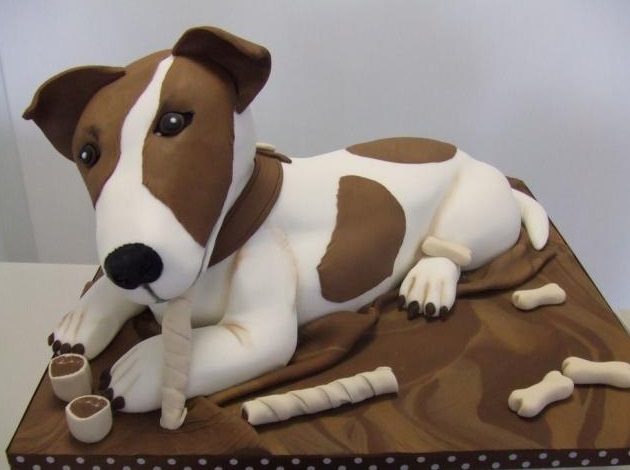
Photo from Picsgen
2. This cake that looks a little too much like the real thing.
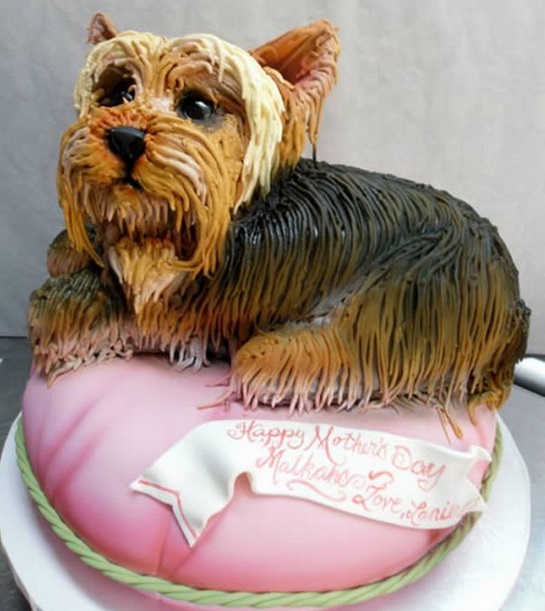
Photo from The-Cake-Lovers
3. No one likes to get walked all over, but I’m pretty sure it’s okay if these cute puppies walk all over my cake.
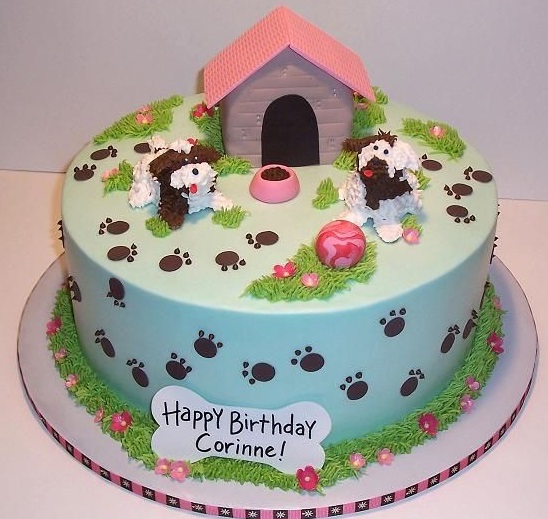
Photo by the FoodAdventure
4. I don’t discriminate, dog cupcakes are great too.
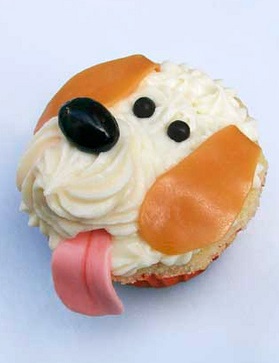
Photo from thecupcakeblog.com
5. I really “dig” this dog cake.
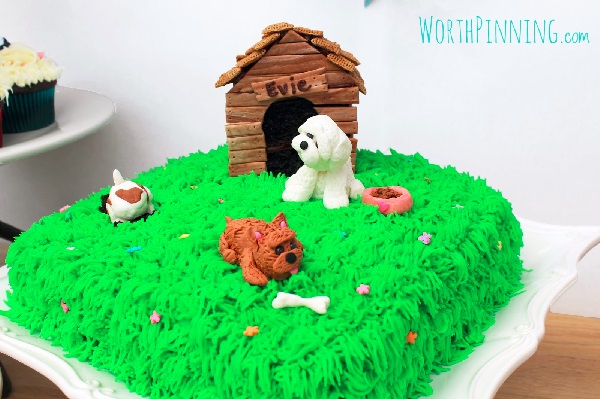
Photo from worthpinning.com
6. I’d be happy to take these guys on a walk… or a taste test.
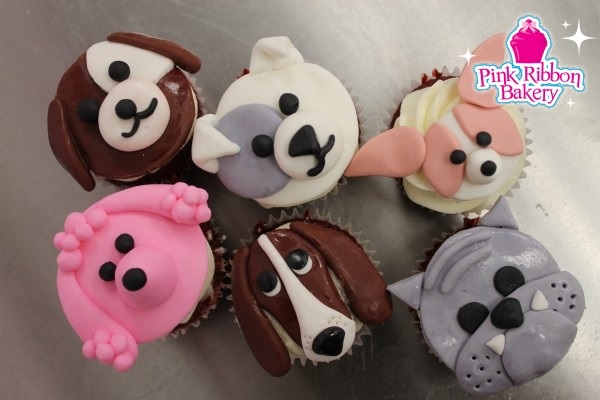
Photo from pinkribbonbakery.ca
7. This lady like pup would be the perfect treat for any dog-loving, birthday girl.
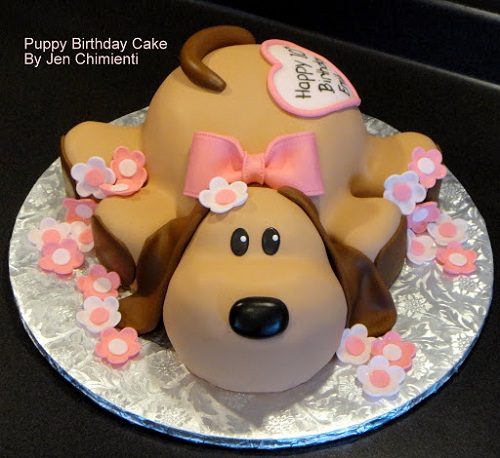
Photo from tipskidsparty.com
8. These soulful eyes are the true meaning of puppy love. This cake is certainly to “sweet” to eat.
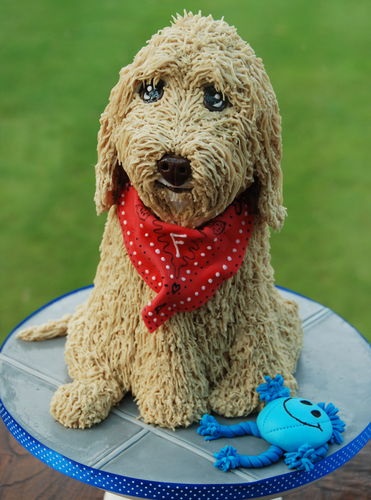
Photo from cakesdecor.com
9. If I was ever turned into a dog cupcake, I imagine it would look something like this.
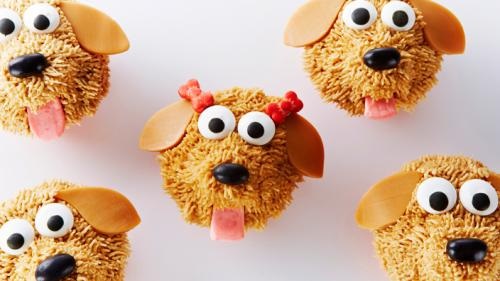
Photo from the CupcakeBlog.com
10. We’ve all wondered what dog food might taste like.
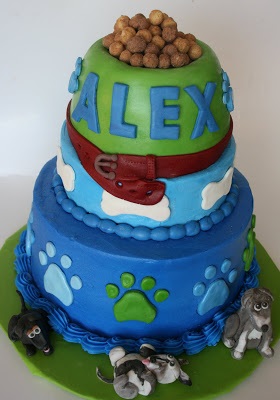
11. These Bulldog cupcakes don’t look excited to celebrate, but as an owner of a Frenchie I know that the look on the outside of these wrinkly pups doesn’t always match the sentiment within.
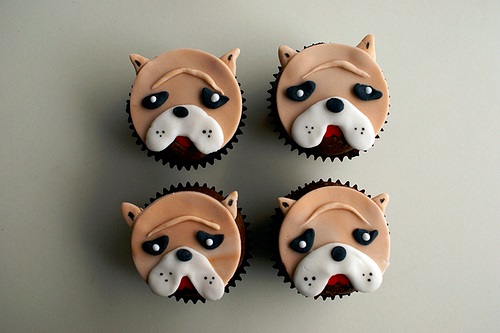
Photo from BaggyBulldogs.wordpress.com
12. Please someone make me this magical looking dog cake.
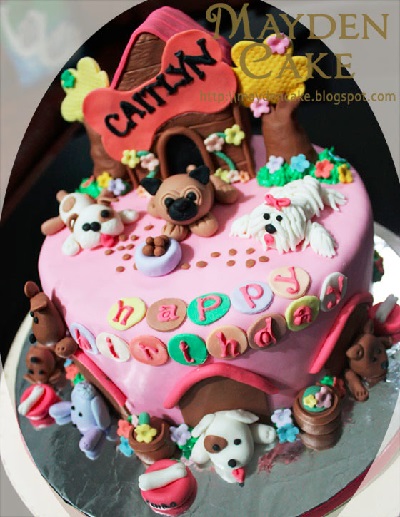
Photo from MaydenCake.blogspot.com
13. You should never give puppies as gifts, but a gift box with a dog cake, is totally okay.
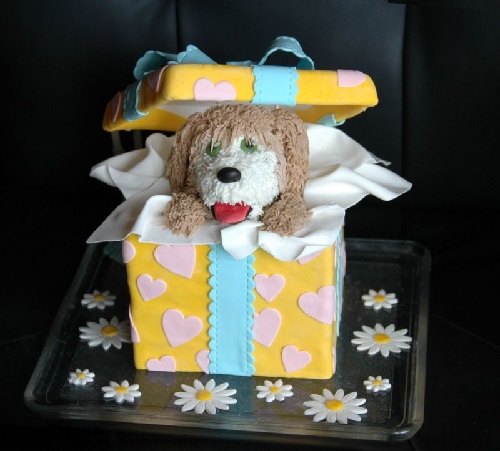
Photo from CakeCentral.com
14. You should always let sleeping dogs lie, especially if it’s their birthday.

Photo from TastyTreats.co.uk
15. If someone made a cake inspired by me writing about dog cakes, this is what it would look like.
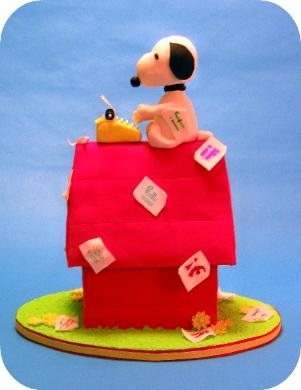
Photo from Dahlia’s Cakes
Have you ever gotten a dog-themed cake or dessert for your birthday? Tell us about it in the comments below!
7 Must-Have Tips for a Dog-Friendly BBQ
National Grilling Month kicks off on July 1, and odds are you’re making plans to host some cookouts. But before your next party, make sure you are giving extra consideration to your four-legged friend.
“It’s easy for dogs to quickly access food and other items that could be dangerous to them,” says Kiko Bracker, D.V.M., director of emergency and critical care at Angell Animal Medical Center in Boston. For instance, Bracker recalls a dog who needed emergency surgery after he ingested enough gravel to fill his stomach. Gravel alone may not be appealing, but drippings from the grill had splashed onto the rocks, tempting the dog. The hospital also receives numerous cases every summer of dogs who consume corncob holders and barbecue skewers.

1. Consider your Menu.
Because skewers pose a threat, Bracker recommends not using them. Be aware, too, that bones and corncobs can be life-threatening. “If they’re not digested, they can pass through to the small intestines, resulting in small bowel obstruction, which can become fatal without emergency veterinary care,” he says. If you do serve these items, place corncobs and bones in a garbage can that’s out of a dog’s reach. Peach pits, foil, plastic wrap, and cotton string used to bind roasts can also cause issues, so keep them away from your dog. If you want to treat your dog to a piece of meat, make sure it doesn’t contain bones and isn’t so hot that it burns your dog’s mouth.
2. Dog-Friendly Foods.
There are plenty of dog-friendly fruits and vegetables your dog can enjoy right along with you. Make sure you prepare them in a manner that is safe for your dog and make sure to feed in moderation.
3. Hot Off the Grill.
Although most dogs are smart enough to avoid an open fire, they can still get into issues with the grill, especially if it falls over and injures them, Bracker says. Their leashes, for example, may get tangled in a grill’s legs, knocking it over. Be aware that this could happen and take steps to prevent it, by securing the grill, limiting your dog’s access to it, and removing leashes or other items that might become entangled in the grill.
4. Scan the Perimeter.
In your own home, you have probably already done this, but if you are going somewhere new or heading to a park for a BBQ, check that poisonous or harmful plants and gardening supplies are out of your dog’s reach, including fertilizer, rat poison, and plant food.
5. Heat Check.
Because dogs can’t cool down as quickly as people, heat can be problematic. The rule of thumb? “When it’s too hot for us, it’s too hot for our dogs,” Bracker says. If it’s safe for your dog to be outside, provide fresh water and shelter in the shade. Otherwise, keep your dog inside and allow access to an air-conditioned room.
6. Set Some Ground Rules.
Finally, if you’re at home ask your guests to help keep your dog safe. If your dog is inside your home, remind guests to close doors behind them or watch that your dog doesn’t escape when opening yard gates.
7. Have fun!
Break out the ball or throw a Frisbee and have a doggone great time!
Good Non-Shedding Dogs for the Apartment Life
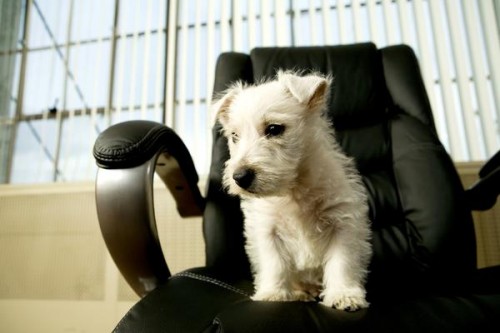
Choosing Your Dog
Finding the right dog is complicated if you have limited living space and even more difficult if you have allergies. Before looking for a dog, it is important to do research and learn about types of dogs who adjust well to apartment life and who are considered low- to non-shedding and hypoallergenic. Because each dog breed is unique, you cannot know for certain which breed or mix of breeds will cause an allergic reaction, so everyone in your household should try to spend time with the kinds of dogs you are considering before making a decision. This will prevent your choosing a dog who is not suited for apartment living or who triggers allergic responses.
Miniature Schnauzer
The miniature schnauzer is a family dog and loving companion, a lapdog who is playful and tolerant with children. This small schnauzer is one of the most adaptable terriers and can be a well-mannered apartment dog. She sheds very little, although she has has a short coat that needs regular maintenance because the hair is prone to matting. Miniature schnauzers are curious and alert and enjoy being right in the middle of any activity.
Soft-Coated Wheaten Terrier
The soft-coated wheaten terrier is one of the most gentle terriers. When provided with enough outdoor exercise, these can be calm, sweet apartment dogs. Wheatens are very affectionate and prefer to be lapdogs even though they weigh about 35 pounds. They are playful and friendly with children and dogs. Soft-coated wheaten terriers want to be close to their people and adapt well to life in the city. Well-balanced wheatens can remain calm even when the doorbell rings or people come to visit.
Bedlington Terrier
Bedlington terriers are companion dogs who enjoy moderate play and exercise, crave affection and get along fairly well with people and other pets. They are gentle dogs who are comfortable in apartments and can be good watchdogs. The Bedlington weighs under 25 pounds, has a curly woolen coat that does not shed and resembles a lamb.
Chinese Crested
Chinese crested dogs are playful, affectionate lapdogs who get along with cats, other dogs, adults and children. They do not need much exercise and are happy playing games in the house and going for short walks outside, as long as the weather is not cold. The hairless variety of this breed is non-shedding, but has special skin care needs, such as a need to be protected from sunshine. Your hairless Chinese crested should also wear a sweater for cold or cool weather outings.
Havanese
The Havanese is considered a hypoallergenic, non-shedding dog breed. These dogs originated in Cuba, where they were kept as companion dogs. They are excellent family dogs, friendly with everyone—other dogs, pets, adults, children and strangers. These little dogs are attentive, intelligent and trainable, as well as silly and clownish, and they enjoy being the center of attention. They can be calm, quiet apartment dogs whose exercise requirements will be satisfied by a short walk and a vigorous indoor play session.
Italian Greyhound
Italian greyhounds are ideal apartment dogs who need little exercise, except for an occasional outdoor run. They are very friendly, easy to train and loyal. They shed very little, so are good for allergy sufferers. These slight dogs are sensitive to cold, so you will have to provide your Italian greyhound with a warm home and a sweater when the weather is chilly. Italian greyhounds prefer a quiet, calm atmosphere, and they are excellent dogs for people who lead quiet lives and who enjoy a calm companion by their side.
The Life Span of an Irish Wolfhound
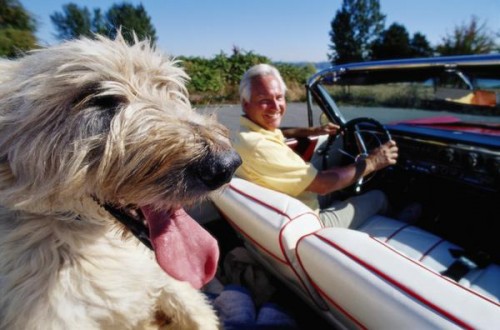
Considerations Before Buying
Compared to other breeds, Irish wolfhounds live significantly shorter lives — a factor the Irish Wolfhound Club of America asks all perspective owners to consider before acquiring the dog. If you own an Irish wolfhound, be prepared for your dog to encounter serious health conditions. Irish wolfhounds suffer from genetic disorders associated with the breed including high rates of bone cancer and dangerously enlarged hearts. Because of their large size, these dog are at higher risk for painful hip dysplasia and other joint problems. Irish wolfhounds are also the breed most likely to suffer from bloat, a life-threatening condition where the stomach fills with gas and twists, cutting off the blood flow through the body. Despite these health concerns, proper veterinary care can help owners and their Irish wolfhounds spend many healthy years together.


|
A New Free Course on Dog Grooming Reveals the Secret Step-by-Step Techniques used by the best Dog Groomers in the country!
Finally, You Can Now Groom your Dog on your own at home without having to hire an expensive groomer! |