

Tips for Newly-Adopted Dog Owners

When you bring home a newly-adopted dog, you can expect her to be confused and unsure of herself for the first few days. If she comes from a shelter, she might not have experienced the same type of lifestyle that she finds in your home and could be overwhelmed and nervous. Find out as much information as possible about her former life, her behavior and personality. Expect that it will take a few weeks or possibly months before she settles down and regains her confidence.
A Safe Space
Give the dog her own safe space by providing her with a bed in a corner of the house that is peaceful and quiet. Show her that it is hers by giving her a treat in the bed and spend time sitting there with her. Each time you take her to the bed, give her the command by saying the word “bed” and reward her when she gets into it. Prevent children and other pets from interfering with her when she is in the bed, so that she learns it is a refuge when she needs one.
Feeding Time
Feed the dog the same food she has been eating, if possible. If you don’t know what she has been getting, start her off with good quality kibble in small quantities to avoid an upset stomach. If she is underweight, feed her four small meals a day instead of two large meals for the first month to help her digest the food and to prevent her from overeating. Provide plenty of fresh water at all times and watch her carefully for any signs of vomiting or diarrhea. Once she is eating the food without any side effects, you can gradually introduce treats and home-cooked dog food, if you prefer.
House Training
If your newly-adopted dog has lived most of her life outdoors or in a cage, she might not understand that she can’t soil where she sleeps. Anticipate her needs and take her outside immediately after she wakes up in the morning, directly after meals and last thing before bedtime. If she is a puppy or older than 7 years, she may need to go more often. Wait outside until she eliminates, then praise her enthusiastically every time. If she has an accident indoors, ignore it and clean it up with an enzymatic cleaner to remove the smell. Avoid punishing her, because she may not understand that she has done wrong and it will confuse her.
Preventing Anxiety
Your newly-adopted dog might bond with you so well that she becomes terrified of losing you. This could take the form of separation anxiety, which manifests in destructive behavior, excessive barking, soiling or even aggression towards family members and other animals. Begin leaving the dog alone for short periods of time soon after you bring her home, so she becomes accustomed to you leaving and returning.
Can You Change a Dog’s Name After Adopting Him?
Positive Association
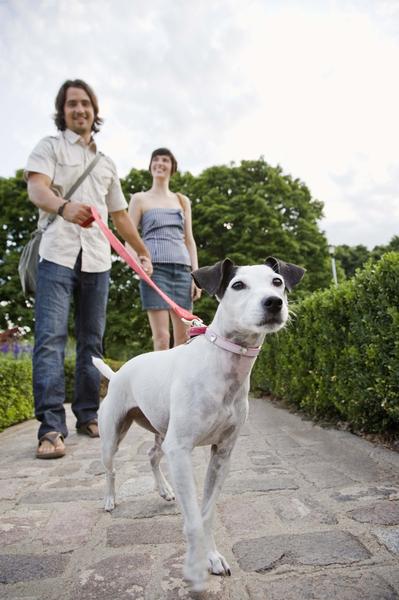
Whether Beauregard knew his name well or was given that name in the shelter, changing it is as simple as teaching him a new command. Once you’ve decided on his new name, periodically call his new name in a happy, upbeat tone of voice. When he looks at you, praise him enthusiastically and reward him with treats. Even if he doesn’t look at you the first few times, give him a treat when you say his new name. Soon he will start looking at you when you say his name because he knows that word means something good. Continue to cheerfully say his name and reward him with treats multiple times a day for a few weeks.
It may take some dogs just a few times to learn a new name; for others it may take a few weeks. Attaching his new name to a fun game like fetch or obedience training also reinforces it: “Toby, get the ball!” “Toby, sit.” “You are such a good boy, Toby!”
Name Pairing
Another way of teaching him a new name is to pair it with his old name for a while and eventually drop the old name. So if his old name was Beauregard, and you want to change it to Toby, start calling him “BeauregardToby.” Eventually drop “Beauregard” and just call him “Toby.”
The Name Itself
Don’t worry if the new name is completely different from his old name. Many people think that the new name should be similar to the old name, such as changing “Dolly” to “Molly.” It really isn’t necessary for them to be similar since dogs associate our tone and actions with the name instead of the actual sound.
Never associate the new name with something negative. Do not call your dog by his new name to scold him or to come to you for something he does not like. You want your dog’s new name to be positive. When deciding on a new name, make sure it doesn’t sound similar to something negative or a correction.
A Fresh Start
For dogs who have been mistreated or who have behavioral issues, a name change is often the first step to changing the dog’s mindset and behavior. If Beauregard was in an abusive home, he may associate his name with mistreatment, so a new name helps to give him a fresh start. A dog who has had behavioral issues may associate his name with the bad behavior you’d like to correct. A new name can help him to respond to positive behaviors.
Adoption Requirements for Dogs

General Adoption Requirements
For most people adopting a dog, the process is pretty straightforward. There are several things modern adoption centers and shelters need to learn from you, much of which will be covered in the adoption application. Unless there are special issues to address, most applications ask the same questions. You will be required to either own your own home or, if you rent, produce proof you are allowed to have a pet. You will be asked about previous pet-owning experience, and in some cases you will need to be an experienced dog owner. Many shelters require you have a back yard, but this requirement can be waived if the shelter personnel feel it’s appropriate. Many shelters require you supply contact information for a veterinarian or others who can attest to your suitability to have a dog. Finally, the dog must be for you, not a “surprise” or gift for another, and your spouse, if applicable, must join in the adoption process.
Special Situations: The Dog
In some situations, adoption requirements become a little more stringent. This is particularly true when adopting a breed of dog that requires a lot of exercise. In such cases, you will almost definitely be required to have a fenced-in backyard. If adopting a puppy, many shelters will require you to enroll the pup in a training class; many shelters offer them for free for adopters. Many times, well-meaning folks will adopt a puppy, neglect to teach him basic obedience and manners, and then, when he’s fully grown into an unmanageable adult dog, return him to the shelter, where his chances of being re-adopted are slim. Even if the problem was not his fault, it looks bad on his record to have been returned.
Regulations
Oh yes, those dreaded regulations. There are certain dog breeds for which owners pay dearly when it comes to insurance premiums and homeowner fees. Some homeowner’s associations ban breeds they deem “dangerous,” never taking into account that dogs have unique personalities. Even if you own your home, you may be required to show proof that your homeowner’s association has not passed limitations on the size or breed of dog you may have.
Your homeowner’s insurance company may also have something to say about the breed you choose. If you are considering a pit bull, Rottweiler or mastiff, for instance, you should look into your insurance policy to be sure there are no problems down the road. There have been cases of dogs such as greyhounds and German shepherds being disallowed by insurance policies, so check carefully.
If you rent and are allowed to have pets, be sure you can pay any necessary pet deposits, and don’t select a dog that exceeds the weight limit.
Your Situation
Shelter personnel and rescue groups get to know the dogs in their care very well and are in the best position to gauge whether the dog you have chosen is the right dog for your situation. For example, a nervous little dog who may be a fear-biter is not the best choice for a family with small children. Certain breeds, such as terriers, are usually not adopted to people with cats or pocket pets because of their natural prey drive. An elderly person is not a good match for a strong, 80-pound, adolescent pit bull.
There may also be requirements as to your lifestyle. If you prefer to read a good book while curled up by the fire, an active breed will be miserable with you; get an older, smaller lap dog instead. Don’t take it personally if shelter personnel feel you don’t have the requirements needed to adopt a certain dog; their first priority should always be the dog’s best interest.
Inspection Tips for Adopting a Dog
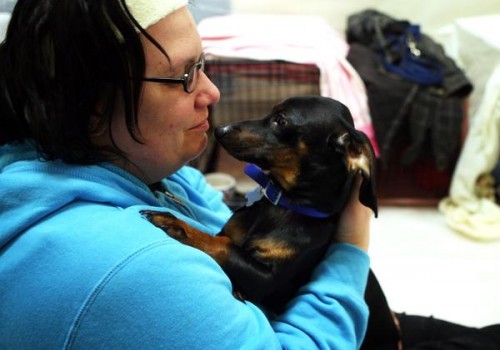
If you’re looking for inspection tips before adopting a dog, you’re ahead of the game. Many folks purchase pups right off the Internet, site unseen. This is a bad idea because Internet breeders can be worse than puppy mill breeders; Internet breeders don’t need to be regulated. It’s always best to inspect a dog before you adopt so you’ll know exactly what you’re getting. After all, you’ll probably have this pup for the next 10 to 15 years. Have a question? Get an answer from a Vet now!
Pre-visit Work
Before visiting a shelter or rescue, check it out online, recommends trainer Sue Sternberg on Petfinder. If the dog descriptions all sound similar, such as “sweet, friendly and loving,” that could be a red flag, which signals a shelter doesn’t know its animals well or, worse, doesn’t want to say what the real personalities might be. Avoid such shelters. A good shelter will allow you to return a dog any time, will let you take the dog on a walk and can tell you about the dog’s temperament. It’s common to travel up to three hours from home to find a good shelter or rescue.
Sociability
Look for a social dog above all else; you’ll likely have the most success transitioning a social dog to your home. A social dog likes to be near you. He’s friendly, affectionate and bonds easily with people. You’ll probably have lots of fun with a social dog.
Determine Whether a Dog is Sociable
Approach a dog that strikes your fancy, and put your hand on his kennel. The dog should walk over to sniff it. Say, “Good dog!” Move your hand slowly across the kennel. A social dog should follow it. Bad reactions include dogs who slink or cower at your approach or who aggressively bark or lunge at you. Don’t choose a dog just because you feel sorry for it — you can’t rescue every dog there. Your job is to find the best dog for you.
Walk the Dog
When you find a social dog you like, ask to walk him. Once you are away from the commotion of the shelter, find a quiet place and sit down. The dog should come to you to seek your attention. If he does, slowly pet his back or scratch his chest. He should enjoy this. If he moves away or shows aggression, keep looking. He also should not mouth you, even in a playful way, because that behavior can lead to biting.
Children, Lifestyle, Other Dogs
If you have a small child or another dog, introduce them to the dog you’re considering. Your potential dog should want to greet your child. To determine whether both dogs will get along, take them for a walk together. The dog you adopt should also fit with your lifestyle. If you’re a high-energy person who loves to play, jog or walk daily, a high-energy dog is a good fit. If you want a quiet dog who is content to live in an apartment, choose a dog who isn’t as active. When you have a different energy level from your dog, you’ll both be frustrated, according to Cesar Millan on his website, Cesar’sWay.


|
A New Free Course on Dog Grooming Reveals the Secret Step-by-Step Techniques used by the best Dog Groomers in the country!
Finally, You Can Now Groom your Dog on your own at home without having to hire an expensive groomer! |