

How to Bring an Adopted Dog Home
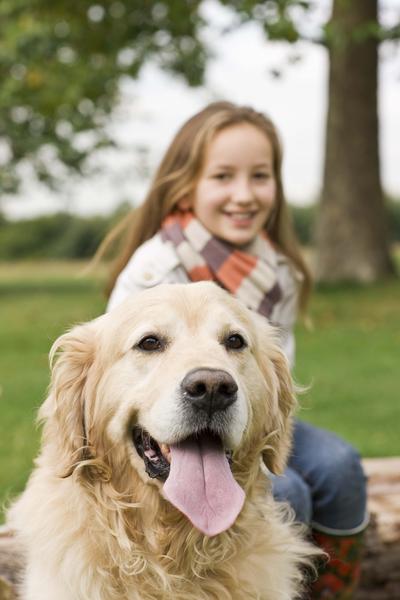
1Prepare your home beforehand. Remove any items he could choke on and put up any electrical wires. Change is stressful, and behavior problems may arise while he adjusts to his new environment. Set up a crate or a safe room where he can stay when you are not home to watch him. Place his food and water bowls in the area so he sees it as his.
2Walk him around your property first when you bring him home, keeping him on the leash so he doesn’t wander off. Give him plenty of time to investigate every inch of the yard if he wants to, and lead him to all areas he will use. Walk him long enough for him to empty his bladder as well so he will be less likely to mark indoors.
3Take him inside when he is done exploring the yard. Keep him on the leash as he explores his new home. Walk him from room to room, allowing him to stop and explore as much as he wants. Do not rush this process. If he attempts to mark his new territory, stop him by saying “no” loudly and take him outside to urinate.
4Show him his crate or area where his food and water bowls are. Fill both bowls and allow him to eat or drink if he wants. Remove his leash and allow him to roam freely, but watch him carefully. Take him outdoors to potty every two hours. Shower him with affection and hand out treats when he potties in the right place or behaves properly.
5Continue keeping him under supervision for several weeks while he adjusts. Once he is comfortable in his new home and has learned what is acceptable, he can be left to roam freely if that is what you prefer.
People Who Adopt Dogs & Then Get Rid of Them
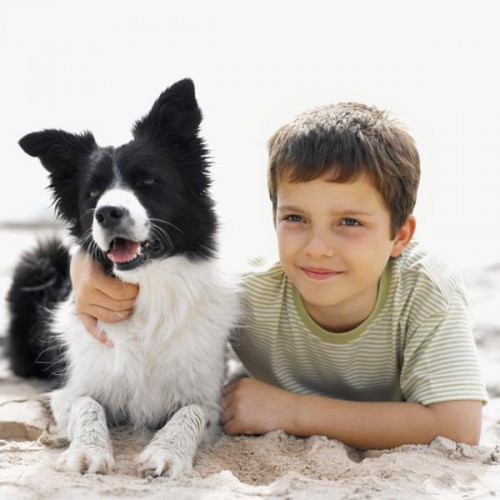
According to the American Society for the Prevention of Cruelty to Animals (ASPCA) and studies reported in the Journal of Applied Animal Welfare Science, 20 percent of dogs in shelters were adopted from shelters. The adopters returned their pets for a variety of reasons, most having to do with behavior problems, conflicts between the new pet and in-home pets or a problem between the owner’s children and the new pet. Have a question? Get an answer from a Vet now!
Behavioral Problems
Almost a third–28 percent–of pet owners who return their pets do so because of a behavior problem. Many shelter dogs end up in the shelter because of behavior issues, only to be adopted out again–and returned again–for the same issues. Problems such as destructive behavior, inappropriate elimination, aggression, excessive barking, escaping, and other unwanted behaviors can lead to the owner’s dissatisfaction, and the dog’s return to the shelter. Some owners are unwilling or unable to correct their new dog’s behavior problems and return the animal. In many cases either the owners were not informed of the dog’s behaviors, or they held different expectations.
Conflicts Between Pets
Of the pet owners returning their dogs to the shelter, 19 percent cited that the dog did not get along with the other pets in the household. Bringing a new dog into a household of other pets often disturbs the hierarchy established by the other pets. The owner will often shower attention on the new addition to the dismay of the current pets, thus causing strife between them. Dogs will often behave differently at a shelter than in a household, so it is difficult to judge if the new dog will fit in.
Conflicts Between Dog and Children
One problem that causes dogs to be returned to the shelter are conflicts with the child or children in the household. These conflicts ranged from the children stressing the dog to the dog being too rambunctious for the children. Around 15 percent of owners returned their pets for this reason, and 4 percent of owners expected their children to care for the pet. In these cases, the shelter failed to match the family to the appropriate pet.
Other Reasons
Other reasons for shelter returns include that the dog got too large, the owner or family member had an allergic reaction, the dog had a health issue or the owner didn’t have enough time to spend with the pet.
Reduction of Dog Returns
Most returns occur from a failed set of expectations. The adopter often has a skewed perception of pet ownership and the role a dog plays in it. To reduce returns, shelters need to educate their potential adopters better as well as screen the people looking to adopt a pet. If the shelter educates the new pet owner on what to expect in the dog’s behavior, health, and cost, the pet owner may be able to make an informed decision regarding the pet they adopt.
History of the German Shepherd

The GSD’s history traces to the 1890s, when German calvary officer Capt. Max von Stephanitz sought to perfect a superior herding dog from his native country. He admired intelligent, strong dogs and saw many superior traits in native herding breeds. Despite his search, however, he didn’t find one that embodied his ideals until he attended a dog show with a friend in 1899.
Known as the father of the breed, von Stephanitz spied a dog named Hektor Linksrhein who impressed him so much that he purchased him on the spot and formed Verein für Deutsche Schäferhunde (SV), of Society for the German Shepherd Dog, later that year. This milestone in the GSD’s history marked its entry into the purebred-dog arena.
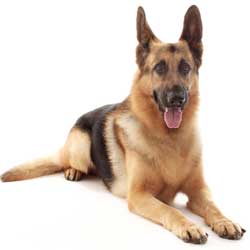
The German Shepherd Dog breed made its debut in the United States in the early 1900s and got its biggest boost in popularity after World War I when GSDs served as messenger, rescue, sentry and personal guard dogs alongside servicemen. Big-screen superstars Rin Tin Tin and Strongheart also helped promote the breed as loyal family dogs and home guardians.
The American Kennel Club recognized the German Shepherd Dog in 1908 as part of the registry’s Herding Group. Though the dogs retain their shepherding heritage, German Shepherds are now predominantly used as service animals and family companions. GSDs consistently remain near the top of the AKC’s most-registered breeds, securing their spot as one of the country’s most admired dogs.
Great Children-Friendly Dog Breeds

Airedale Terrier
The “King of the Terriers” is hugely versatile, performing successfully as a hunter, guide dog for the blind, livestock herder, elegant show dog, and loving family pet. Airedale Terriers are smart, sensitive, and playful, making them fabulous companions for children. More>>
Australian Shepherd
Australian Shepherds are active, intelligent “people dogs” who want nothing more than to be a part of the family. Happy to travel to kids’ baseball games, join in on fun outings like trips to the beach, and herd the kids around the yard, Aussies make wonderful companions for respectful children who are taught to behave properly around the dog.
It’s hard to deny the Beagle’s rightful place in a fun-loving pack of “Peanuts,” though Beagles are more engaged and sincere than the ever-famous Snoopy and just as entertaining. This short-haired miniature hound loves to be a part of the family and to be involved in everyday things. He will follow little ones around the house and yard, keeping one eye on them and the other on mischief of his own. He needs a good parent to train him and teach him manners since he’s naturally a curious little fellow with big-dog ideas of his won.
Bearded Collie
Described as bouncy and exuberant—ideal for keeping happy kids active and moving— the Bearded Collie lives to be around children. With its long, easycare, unkempt coat and athletic build, the Beardie loves to participate in fun activities and sports, like jogging, running alongside a bicycle, hiking, and chasing sheep (get some!). The Bearded Collie’s strong sheepdog instincts can lead to its gathering (herding) young people or even nipping at their Nikes: parents must train the dog to know the difference between kids and ewes and supervise so that the dog’s nanny instincts are properly channeled.
Bernese Mountain Dog
For the family with children seeking a large dog, the Bernese Mountain Dog makes a docile, sweet-natured companion. With its long, silky black coat marked with characteristic white and rust, the Bernese stands up to 27.5 inches at the shoulder. It is a versatile outdoor dog whose smart and confident demeanor recommend it for the job of child’s companion. They are known to be able to do anything from pulling carts, herding cows, guarding the home, yard and farm, and even babysitting the kids.
Bichon Frise
This animated powder puff is a lovely companion for older children, and fits perfectly in any household, from suburban living to big-city apartments. The beautiful, plush, snow-white coat is low shedding dog breed but needs regular professional grooming to maintain. The Bichon Frise might be suitable for people with dog allergies.
Boston Terrier
Playful, gentle, and affectionate, the Boston Terrier makes a great pal. Sturdy enough to enjoy rough play, they want to be with you and are not backyard dogs. This compact, smart breed is easy to care for, requires minimal exercise, and does best when his humans show gentle leadership.
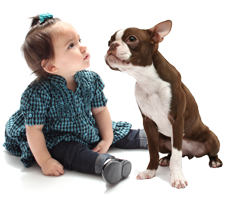
The handsome Boxer is as loyal and dignified as he is affectionate and energetic. When trained and socialized, Boxers are tireless and downright silly companions for youngsters. Supervise to make sure 50 to 85 pounds of Boxer don’t knock over your kids and their friends.
Bulldog
The lumbering, gentle Bulldog is both sturdy and slow—a great match for families with kids. Often referred to as the English Bulldog, this dignified dog breed is typically an even-tempered and agreeable fellow, and tends to form tight bonds with children.
Bullmastiff
Created using a blend of 60 percent Mastiff and 40 percent Bulldog, the powerful Bullmastiff combines the best of both dog breeds in a large, strong package. This dog breed is devoted to his family, adores children, and possesses a protective but mellow outlook, making the Bullmastiff one of the better extra-large breeds for city living.
Bull Terrier
Like all terriers, the Bull Terrier is active and full of personality, and this sometimes comical breed is especially ready for fun. This is a substantial dog, weighing up to 70 pounds, and can be headstrong like a stubborn child. But with positive training, socialization, and inclusion in family activities, the Bull Terrier thrives as a loving companion.
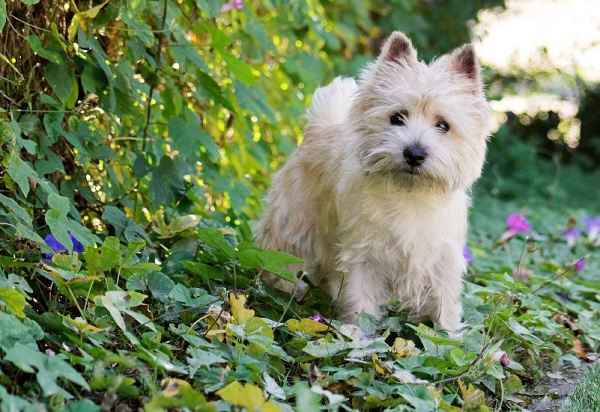
Cairn Terrier
An active and super bright little dog—the breed once followed the skipping Dorothy down the Yellow Brick Road—Cairn Terrier loves to be the center of attention…in real life and movies! They’ve been described as rugged and resourceful and do best as family dogs, provided they have a dog-smart parent to teach them right from wrong. Since they will chase small animals, like squirrels and chipmunks, they must always be on lead when not in a safely fenced area.
Cavalier King Charles Spaniel
Nicknamed the “Comforter Spaniel” by British royalty who favored the dog breed throughout history, today’s Cavalier makes a devoted pet for gentle children and does not require a castle to keep him happy. Cavaliers can adapt to a little exercise or a lot, and the beautiful, silky coat is easily maintained with regular brushing and combing, so no professional grooming is required.
Even though most kids today haven’t heard of Lassie, the Collieremains the proverbial children’s dog due to the breed’s instinctive protective nature and the intelligence of a ten year old child. Collies like to take walks and run in the backyard, but they adapt to the family’s lifestyle and can be happy in any size home. The rough Collie requires more grooming than the smooth coat, but it’s essentially amounts to just a few minutes a week.
Golden Retriever
The bright, smiling Golden Retriever is a medium-sized sporting dog, weighing in between 55 and 75 pounds, with a long, lustrous coat in various shades of “golden.” This breed has never met a stranger and views all youngsters as his designated playmates. The Golden is always ready for play, whether it’s galloping in the backyard, swimming on the beach, or hiking on a trail.
Labrador Retriever
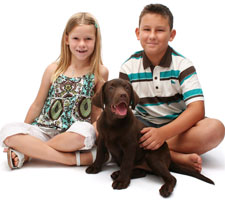
Lead a Lab to water and it will retrieve all day: balls, sticks, and even children who happen to go for a swim. Whether black, chocolate or yellow, the Lab’s kid-friendly nature has helped make him the most popular dog breed in the United States. Patient and gentle by nature, the Lab excels in a home with respectful children, and craves regular play and exercise to channel his exuberance for life.
Newfoundland
A devoted family companion dog with a sweet and even temperament, the Newfoundland has proved himself reliable around kind, well-behaved children. Although kids should never be allowed to climb on top of or ride on the backs of these gentle giants, Newfies are robust and engaged playmates, and delight in hauling children around in carts.
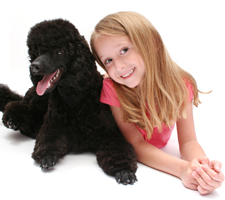
Although Toy Poodles are too fragile for young kids, Miniature Poodleand Standard Poodle are excellent playmates for respectful children. Well-bred Poodles are active and intelligent, and revel in learning fun tricks or playing endless games of fetch in the yard. An added bonus: Poodles are dogs that don’t shed and might be suitable for people with dog allergies.
Pug
The Pug is as sturdy and big as a Toy breed gets. Weighing in at 14 to 18 pounds, the Pug is a compact, little dog with tons of personality. Most Pugs are easygoing and playful, enjoying the attention of sensible children who recognize that the Pug is no plaything. In cool weather, Pugs are animated and entertaining friends for kids, but tire easier than larger dogs.
Weimaraner
No reason for the kids to be afraid of this ghost, the Weimaraner (called the “grey ghost” because of its distinct color) is an easygoing, tolerant family dog whose above-average intelligence makes him easy to train. Weims are naturally graceful and know how big they are, even if they attempt to snuggle with owners on small chairs on laps. Ancestors were bred to hunt, and today’s Weimaraner likes to be a member of the family pack.
10 Dogs Breeds That Love to Dig
Few of us cheer when our dog digs up our garden. However, we should keep in mind that if a dog has digging genes, in many cases we humans developed that natural trait to serve our purposes. It’s not the dog’s fault our objectives have changed.
While all dog breeds have some instinct to dig and may scratch or dig at the floor, carpet or bed, as he looks for the perfect spot, there is no doubt that some dogs take their digging a little more seriously than others.
See which dog breeds are most likely to dig and find out why they do it.
10 Dog Breeds Who Love to Dig
These dogs dig like it’s their job because at some point it probably was their job.
1. Dachshund
Hound Group. The German-bred Dachshund used his short but dogged legs to burrow deep into the earth, creating tunnels through which he hunted badgers and other prey. Today, the breed still follows his nose and instincts; he’s likely to dig up flower beds in an attempt to excavate the rodents in his yard. More About Dachshunds>>
2. Bedlington Terrier
Terrier Group. The Bedlington is a natural hunter with a penchant for pursuing rodents and vermin. The Bedlington may resemble a lamb in appearance, but the similarities end there. Tough and persistent, the powerhouse Belington digs with vigor to reach rabbits or rats. More About Bedlingtons>>
3. Cairn Terrier
Terrier Group. A small, active terrier native to Scotland’s Western Highlands, the Cairn was used in packs to control fur-bearing vermin. Like most terriers, Cairns tend to be diggers and are vigilant in their search for underground rodents. Did we mention the word terrier comes from Latin and means “earth dog?” More About Cairn Terriers>>
4. Beagle
Hound Group. Like many scent hounds, Beagles will dig in the yard for in-ground prey, but they may also dig out of the yard to follow the scent of above-ground prey. Bred for generations to track, a Beagle will take on any digging project to accomplish his mission. Although bred in England’s temperate climate, the breed also sometimes digs to cool off. Or perhaps that’s a smokescreen. Maybe the merry Beagle digs when there’s a shortage of rabbits to chase and a corresponding shortage of fun. More About Beagles>>
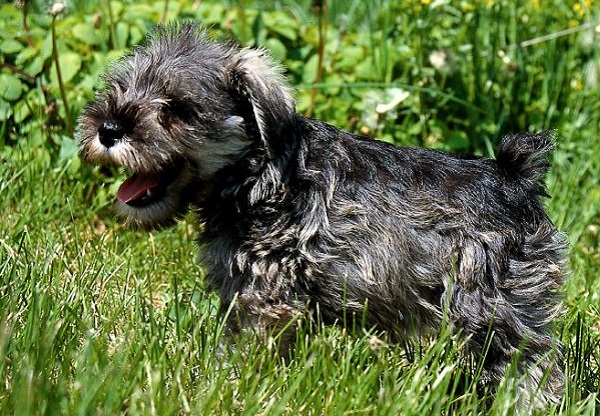
Terrier Group. Bred in Germany working on farms and pursuing vermin, the Miniature Schnauzer still rids its home and property of rats and mice today. The Schnauzer’s drive to exterminate rodents may drive him into the ground. The resulting dirt and holes are the downside. On the upside, unwanted visitors won’t be able to set up housekeeping in the family’s residence for long.
6. Wirehaired Pointing Griffon
Sporting Group. Though originally bred to be a tough hunter, the Wirehaired Pointing Griffon also may moonlight as a digger. His high energy level, drive to hunt, and desire for company make him an excellent sporting companion. In fact, he’s often called the “4-wheel drive of hunting dogs” because of his ability to excel on any kind of terrain: briars, underbrush, field, and water. With great talent, however, comes great responsibility (for the owner, at least!). If left without a task, the Griff may channel his 4-wheel drive skills into the ground.
Fair Weather Fans of Digging
It’s not a mater of whether or not these dogs like to dig, it’s simply a matter of weather.
7. Siberian Husky
Working group. Dogs bred in cold climates such as the Siberian Husky may dig for a warm, underground sleeping area during winter. But your garden isn’t safe in the springtime either; they also dig for cool spots when they’re hot. Their double coat offers insulation from both heat and cold, but who can blame them for supplementing what Mother Nature gave them.

Working group. The Malamute is a legendary freighting dog of polar expeditions, to keep warm in the snow, they often dig to burrow themselves into a warmer underground sleeping arrangement. While the Malamute has adapted well to warm climates, they prefer the winter months and keeping their temperature pleasant, so it’s not uncommon to see them digging into the earth on a hot summer day to stay cool.
Dogs Who Weren’t Bred to Dig, But Might Do it Anyway
They aren’t professionals, but that won’t stop them from trying.
9. Australian Shepherd
Herding group. The Australian Shepherd wasn’t bred down under, but rather here in the United States. Nor was he bred specifically to dig. But he was bred to work all day alongside his owner. Developed to maintain high energy, an un-exercised Aussie may dig up gardens or under the fence in an effort to cultivate his own work and sense of fulfillment.
10. Border Collies
Herding group. Border Collies are high-energy dogs, having been bred to cover many miles a day in their native Scotland. Border Collies require and thrive on activity, so be prepared to keep them occupied and if you don’t, be prepared for them to occupy themselves. Border Collies are known for excelling at many jobs, if you give them a change they might add landscaper to their list.
Best Dog Breeds for Swimming
One day as I watched my daughter’s Australian Shepherd, Cooper, and Labrador-mixed-breed, Kane, paddling in a lake, I noticed a rather significant variance in swimming form and style.
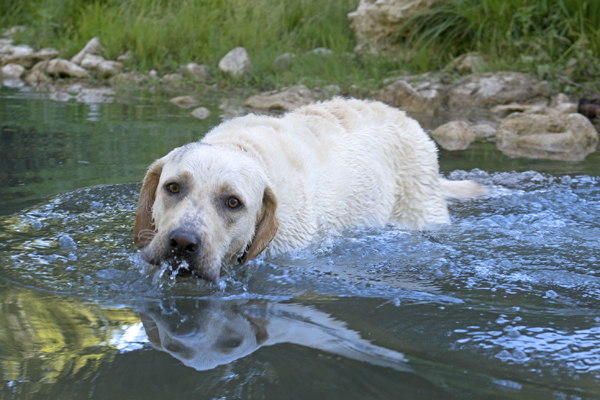
Kane’s webbed paws and strong legs moved him gracefully on the top of the water, his tail a remarkably effective rudder. Cooper, on the other hand, relied mainly on athleticism and determination. His paddling was powerful; his style was sub-par. But ever the herding dog, Cooper happily followed Kane back and forth in the water. As he grew tired, his “never give up” solution was to try to hitch a ride on Kane’s back. Thankfully Kane is as strong as an ox, and ridiculously tolerant about being his brother’s keeper, and/or his lifeboat.
8 Dog Breeds Born to Swim
1. Chesapeake Bay Retriever
Chessies were developed as vigorous water retrievers, strong enough to swim in the cold, rough Chesapeake Bay, and retrieve a hundred birds per day. The Chessie has webbed feet to assist his Olympic-level swimming. Good luck tiring him out in the water throwing a ball.
2. Labrador Retriever
Predecessors of the Labrador Retriever worked with Newfoundland fisherman off the Labrador Sea shores. Renowned for energy in the water and out, the breed was further developed in England for hunting and retrieving. The powerful Lab has webbing between his toes and a strong otter-like tail for swimming. Odds are he’ll match his swimming talent with dock diving, if given the chance.
3. Newfoundland
The Newfoundland was bred to brave freezing cold waters as he worked with fishermen. Fantastic water rescue tales abound about the valiant Newfoundland. With his raw strength, webbed feet, and water resistant coat, the Newfoundland today can’t wait for the opportunity to take to the water. Hopefully his owner likes liquid of all sorts, given the Newfie’s famous drooling and slobbery kisses.
4. Portuguese Water Dog
Bred to accompany fisherman, Portuguese Water Dogs can dive as well as swim. Historically developed to dive for fish and retrieve nets, Portuguese Water Dogs also delivered messages between boats and guarded boats in port. Families today will find their Portuguese Water Dogs head straight into water when the opportunity presents. Getting the dog to come back to land may be more challenging.
5. Brittany
Developed to both point and retrieve, the Brittany became a popular gun dog in the early 20th century. His breed history lacks the swimming legacy of the water-retrievers, but he’s game for activity on both land and water. The Brittany has limitless energy, a wash-and-go coat, and — weighing in at about 30 pounds — he’ll hardly mess up your car after a swimming day.
6. Poodle
The Poodle breed name probably originates from the German Pudel, meaning “one who plays in water.” The famous Poodle clip in actuality was designed not for glamor, but to facilitate swimming. A Toy Poodle can swim too, but smaller dogs may tire over long distances.
7. Nova Scotia Duck Tolling Retriever
Bred to toll, lure, and retrieve waterfowl, water might as well be this breeds middle name. Hunters took note the behavior of wild foxes, who playfully lured waterfowl to the shore making them easy pray and trained these dogs to mimic the action. Believed to be related to the Chesapeake Bay Retriever and the Brittany it’s no surprise that this breed is such a graceful swimmer.
8. Australian Shepherd
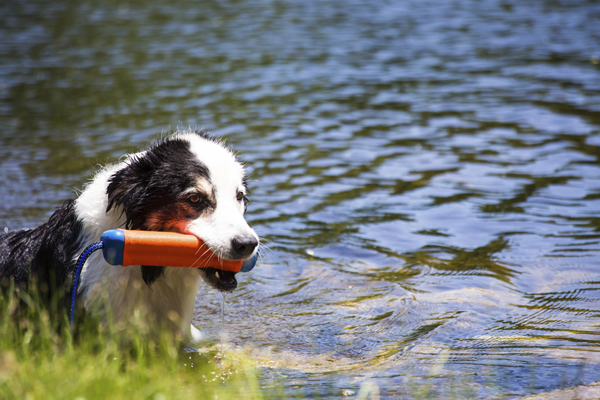
Now it’s time to defend Cooper and Aussies everywhere. Bred as an all-around working dog, Aussies can swim. They don’t have webbed feet or a rudder-like tail (or much of a tail at all for that matter). Their swimming will certainly lack the finesse of other water breeds. After all, Aussies were bred to help ranchers and herd livestock. Nevertheless, the endlessly energetic Aussie will work and play anywhere, including in the water.
1. Bulldog
Dogs bred with heavy chests relative to their hindquarters aren’t designed for swimming. Given their body type, paddling to carry their weight can be daunting if not impossible. While many are known to surf and skateboard they are happier going along for the ride than rowing their own boat. Many enjoy sitting in a kiddie pool, but anything deeper than that, get them a raft and a life jacket.
2. French Bulldog
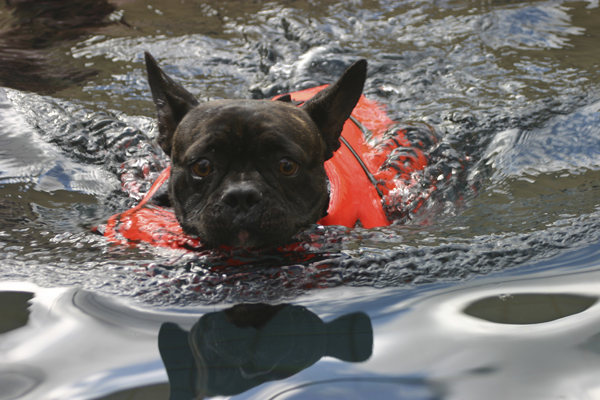
Like the Bulldog, Frenchies are not buoyant by nature. The Frenchie won’t likely care about his aquatic inadequacy; he was bred for companionship, not athletic adventures. Owners inclined to take a Frenchie near water should invest in a dog life jacket. More About French Bulldogs>>
Due their unique size and shape, Bassets more closely resemble an anchor than a swimming dog. Swimming can be a difficult feat for the Basset Hound. The breeds short legs, heavy front-end and drooping skin, makes it hard for them to keep their heads above the water. While they need a life jacket for anything deep, they will enjoy cooling off in shallow water. Sprinklers are probably a bit more their speed.
4. Pug
A breed with roots to antiquity, the Pug in the Toy Group was bred for friendship, not to work for a living. A few Pugs may enjoy a casual dip in the water, but the breed’s short snout contributes to his lack of stamina. Owners must supervise closely and fit the lif ejacket on the Pug…snug.
How to Build Trust With Your Adopted Dog
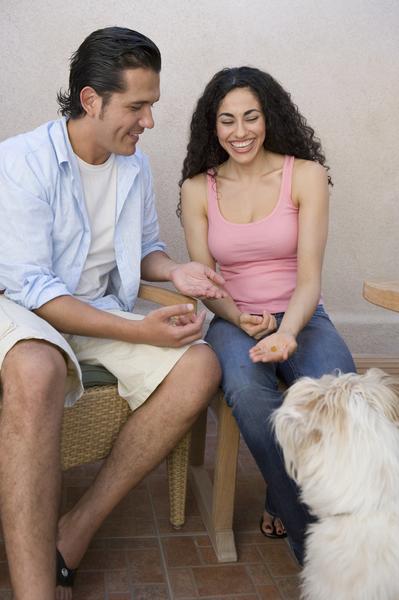
1Offer treats. Most dogs can’t resist the aroma of a tasty treat. This can be a great way to get the dog to come closer. However, you shouldn’t make sudden movements or the dog will become frightened and run. Instead, offer the treat in your palm and wait for him to come to you. If he doesn’t come, place the treat on the floor and take a few steps back. Once he gets a taste for the treat, offer another from your hand. When he gets used to coming to you, continue to hold your hand out after the treat is gone. When he places his head in your hand, gently nuzzle your hand against his fur. This will take time and patience, but can help make your pet less fearful.
2Spend time together. Many shelter dogs have been left behind by their owners and feel they can’t trust anyone. If you’re the type to be out and about a lot, take your dog with you as often as possible. Let him know you care about him and you’re not going to abandon him. When you do have to be away from him, leave toys and treats to keep him occupied until you return. During the first few weeks, you should try to limit any unnecessary trips that require you to be gone for too long.
3Approach the dog carefully. When approaching your dog to pet him or pick him up, do so slowly. You never want to lunge at a dog in an attempt to catch him. This will only scare him more and make it even harder to build trust. You want your dog to come to you of his own free will.
4Give the dog space. Don’t try to smother your dog with love on the first day. Give him a chance to get used to his new home and calm down. This may take a few days, but allowing him to become comfortable will make him more apt to trust you. In time, he will come to you for petting and cuddles on his own without being lured by the smell of tasty treats.
5Be patient. It takes time to build the trust of a shelter pet. Many adopted dogs were neglected or even abused by their previous owners. This can be emotionally scarring for the animal and needs to be considered when building a bond with your new pet.


|
A New Free Course on Dog Grooming Reveals the Secret Step-by-Step Techniques used by the best Dog Groomers in the country!
Finally, You Can Now Groom your Dog on your own at home without having to hire an expensive groomer! |