

Post Surgery Problems for Dogs That Got Spayed
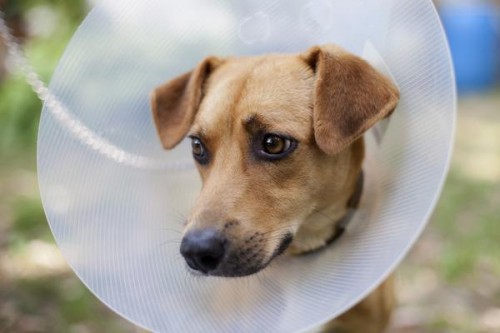
Loose Sutures
Among the most common problems occurring in the recently spayed dog concerns loose sutures or stitches. That’s why your vet recommends using an Elizabethan collar on your dog for about a week, until her incision heals. Yes, your dog hates this “cone of shame,” but it prevents her from licking or chewing the incision. After you bring her home, check the incision a few times daily. If it appears inflamed or swollen, or any pus is seeping out, contact your vet immediately. While slight bleeding for a day or two after surgery is normal, call your vet if there’s significant bleeding. In a worst-case scenario, the incision opens and your dog’s intestines protrude. If that happens, get her to an emergency veterinary hospital at once.
Seromas and Abscesses
Dogs might develop lumps or swelling at the site of the incision. It’s important that your vet examine your dog and make a diagnosis, because these lumps have varying causes. A seroma may form underneath the sutures, filled with watery, reddish fluid. Keeping your dog quiet, as the vet recommends, lessens the odds of seroma formation. Your vet makes a diagnosis by taking a fluid sample. If pus rather than liquid emerges, your dog has an abscess, which means infection-causing bacteria have invaded the incision. Dogs with abscesses often are in pain, compared to those with the normally pain-free seromas. While a seroma might resolve on its own, abscesses require drainage and your vet will prescribe an antibiotic regimen.
Canine Hernias
Hernias occur when the sutures in your dog’s abdominal wall collapse. This can result in fat, intestines and even internal organs falling out of the abdomen and protruding beneath the skin. If the hernia consists only of fat, it shouldn’t cause your dog pain or serious consequences. If your dog appears in pain from the lump, suspect that the protrusion consists of intestinal parts or even organs (commonly the bladder) and get her to the vet immediately. Your pet might require emergency surgery to save her life.
Other Post-Spay Complications
It’s not unusual for dogs to suffer from constipation after spaying. If she doesn’t move her bowels by the fifth day post-surgery, ask your vet whether you might give your dog a stool softener. Your vet can recommend a specific brand and dosage. If she doesn’t have a bowel movement with a few days after consuming the stool softener, take her to the vet. Some female dogs develop urinary incontinence problems after spaying. If dribbling or more serious incontinence doesn’t resolve itself within a few days after the surgery, contact your vet.
Back-to-School Separation Anxiety
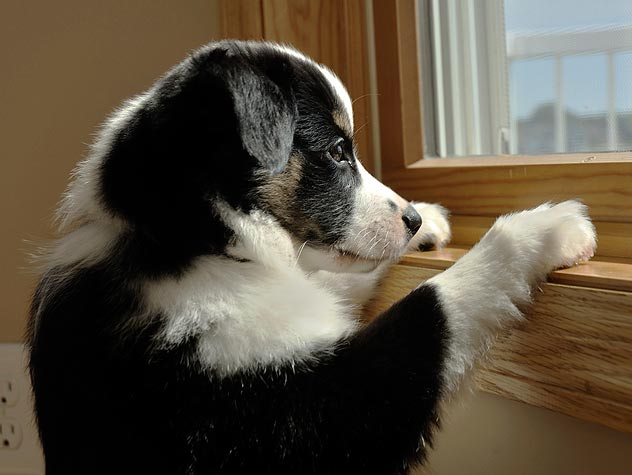
With this sudden change in daily routine, your dog may experience depression or separation anxiety. Separation anxiety is triggered when dogs become upset because of separation from the people they’re attached to.
Signs your dog might be suffering from separation anxiety include destructive or anxious behaviors like:
Howling
Chewing
Pacing
Housesoiling
Attempting to escape from the house or yard
The good news is there are things you can do to help relieve your pup’s distress. The Oregon Humane Society offers these tips to help your dog overcome the “back-to-school blues.”
Schedule an appointment with your vet. Your dog’s anxiety might have an underlying medical cause or your vet might have some additional ideas to help relieve your dog’s stress.
Consider preparing Kongs stuffed with peanut butter or some other favorite treat. Working to get the treat out will provide your dog a distraction from his stress and hours of enjoyment and mental stimulation while you’re gone.
Check out some doggie day cares in your area. A day or two of supervised play and exercise may be beneficial to your lonely dog.
Take your pooch for long morning walks to get him plenty of exercise and tire him out.
Spend quality time with your dog when you are at home; include him in family activities to assure him he’s still an important part of the family.
How to Correct Dog Behavior Problems for Cheap
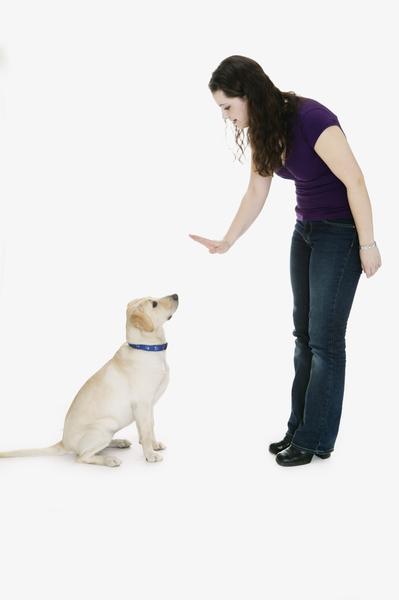
1Buy a dog training clicker. This is a small plastic device that sells for less than $10 online or at pet stores everywhere. A clicker is a tool for positive reinforcement. You simply carry it with you and when Rover does something you approve of, you click the device and then offer a reward. Soon Doggie will understand that certain actions make you happy and earn him a treat, and he will start repeating them more often.
2Use verbal cues along with the clicker. For example, say “sit” or “wait.” When Rover obeys, click and then reward the behavior. Teaching Doggie basic commands costs nothing — except for the cost of the treats — but it helps him understand you’re in charge.
3Socialize your dog. If you have a local dog park, this is a great free opportunity to teach your dog some social skills. Doggie not ready to go out into the world and meet others? Set up some play dates in a more controlled environment, such as a friend’s backyard or a quiet section of the beach. Once there, keep an eye on Doggie so you can correct him when he behaves inappropriately with another dog.
4Download an app for your tablet or smartphone. There are plenty of free or low cost — $2 or less — apps that guide you through a training program. Some have specific goals, such as helping you teach your dog commands, while others focus on behavior problems. Some apps allow you to keep track of your training progress so you know what you’re doing and where to go from there.
5Make your own pet deterrent by mixing one part fresh lemon or orange juice and three parts water. Or try mixing one part vinegar with five parts water. Add the mix to a spray bottle and spray furniture or other areas you want to keep doggie-free. You can also booby trap your kitchen counter by placing aluminum foil or pop cans right near the edge. Next time Doggie wants to jump up or steal something from the counter, he’ll create an avalanche of things — hopefully scaring him enough to deter him from trying again.
Simple Solutions For Behavior Problems
What would you give to make your pet’s behavior problems disappear? Believe it or not, most issues can be resolved in three simple steps. Follow along, and your pet will be humming “Ain’t Misbehavin’” in no time!
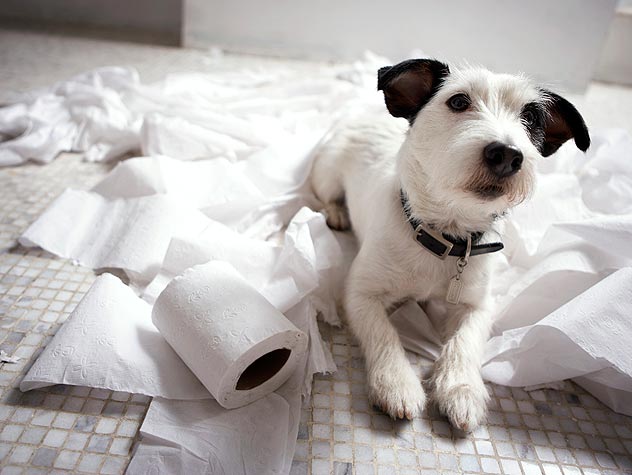
Be careful not to confuse a behavior problem with a health issue. For instance, cats with feline lower urinary tract disease (FLUTD) often urinate outside their litter boxes. Prescribed medications can also have behavioral side effects. Consider the commonly prescribed medicine prednisone, an anti-inflammatory steroid. Side effects include increased water consumption and, as a result, increased urine output. Some of the cleanest dogs I know have house-training lapses when taking prednisone, unless their guardians provide additional elimination walks. Whenever medication is prescribed for your pet, ask about the side effects so you can be prepared.
Watch Your Reward Process
To paraphrase Thorndike’s Law of Effect, rewarded behavior is likely to increase in frequency and unrewarded behavior is likely to decrease in frequency. Take Miss Puss. Each morning, she taps you on the face at four o’clock, letting you know that she’d like a can of kitty morsels. She seems in dire need of a meal, so you do her bidding—and unwittingly reward her behavior. You can bet she’ll be back the next morning! She has learned that tapping yields tasty treats. However, if you had turned a cold shoulder to her early-morning pleas, Puss would have had no reward and no reason to try that tactic again.
What to do? You resolve to hang tough and ignore Miss Puss’s entreaties from now on. But be warned: what started out as a gentle love tap may now escalate to a forceful, extended-claw swat. This worsening behavior is called an “extinction burst.” The animal throws everything she’s got into the behavior that once netted her a reward, testing what it may take to garner a payoff before she gives up and moves on. Her poor guardian must remain unmoved in order to extinguish the misbehavior. Giving in teaches the animal that a concerted effort just might work.
Sometimes, figuring out what rewards an animal can be tricky. Consider canine greeting behavior. You walk through the front door, and Bouncing Betty greets you with a well-placed slam to your solar plexus. You double over in pain and holler a few choice expletives. Is this rewarding to Betty? Yes—you have lowered your face closer to her, and she has your attention. Dogs are like children—both prefer negative attention to no attention at all. Withdrawal of attention (walking back out the door or turning to face the wall) whenever her paws are off the floor would remove Betty’s rewards. To encourage appropriate behavior, teach her to sit, or pay attention to her only when she has all four paws on the floor. Note:
Sometimes we are so relieved when bad behavior has stopped that we don’t acknowledge good acts. Don’t
forget to add a quiet “good pup” or slip Betty a tidbit to celebrate a job well done.
Consider Environmental Management
Some guardians are training junkies—in the best sense. For them, resolving problems by teaching alternate behaviors is a pleasure. Others are less committed to training and more interested in keeping things simple. If that is your philosophy, environmental management may suit you better. Does one really need to spend countless hours creating setups to teach Snoopy to stay out of the garbage, when just keeping the trash can out of reach would suffice? Don’t want the cat on the bed? Close the bedroom door. Hate it when the puppy eats the kids’ toys? Put the toys away when the pup is out and put the pup away (in a crate or gated area) when the toys are spread all over the living room. It’s quick and easy and may be just what the overscheduled guardian needs to resolve certain problems. Note: Please make sure not to abuse this solution by socially isolating your companion animal in a crate, garage, yard, or basement for long hours every day.
How to Stop Dog Litterbox Snacking
People may find this habit hard to understand, but many dogs tend to indulge in eating feces — their own or those of other animals.
Here are a few reasons why your dog might eat poop:
Mother dogs eat their pups’ stool to keep the whelping area clean, and pups may mimic this behavior. This behavior tends to fade during adulthood, but some dogs continue throughout life.
Some dogs indulge due to boredom, stress or because they consider it a sort of delicacy.
Dogs have fewer taste buds than humans and that may be part of why they seem to be less selective than we are in regards to what they will put into their mouths.
In some cases there may be an underlying medical cause, such as lack of sufficient nutrients in the diet. Be sure to check with your vet to rule this out as a possible cause.
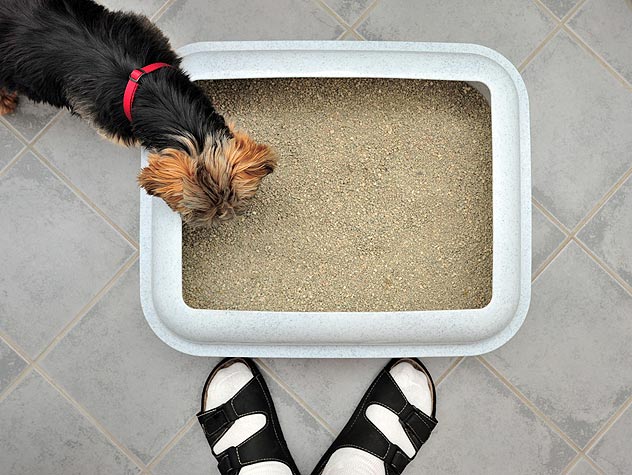
If your dog is eating your cat’s poop: Put the litter box in an area where your dog can’t have access to it or confine your dog in an area away from the box.
Regardless of whose stool your dog is eating, avoid reprimanding them for doing so, as this may result in your dog simply waiting to do it when you are gone. If you catch your dog, try to remain calm, as your urgency might exacerbate the problem.
Why Is My Dog Scared of Thunderstorms and What Can I Do About It?
Q: Why is my dog so afraid of thunder and how can I make him less scared?
A: Many dogs are afraid of thunder simply because they do not understand what it is. Dogs hear this loud noise and perceive it as something threatening.
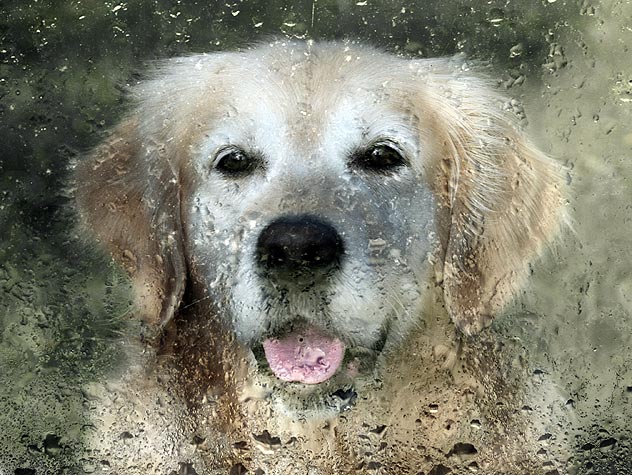
It is important, however, not to try to soothe your pet too much. Doing so can actually encourage his fear if he senses any insecurity in your voice.
During a thunderstorm, try to provide a background noise for your dog, such as TV or radio. This may help to somewhat drown out the noise of the thunder. You can also try to get your dog’s mind off the storm by playing with him.
There are some dogs that require sedation when there is a storm. Consult your veterinarian so that they can prescribe something to calm your dog during a storm.
How Do I Train My New Dog to Stop Chasing My Cats?
THE FOLLOWING IS AN EXCERPT FROM PETFINDER.COM’S FURKEEPS KICKOFF LIVE FACEBOOK Q&A.
Q: We have two adult cats (ages 13 and 4 — both adopted) and recently adopted an adult dog from our local shelter who seems to be about 2-3 years old. The dog just can’t seem to break that dog/cat stereotype and loves to chase the cats! We have the cats in our bedroom behind a gate but ultimately would love to have them all together. Can’t we all just get along?
A: It is not unusual for a dog to want to chase another moving animal, no matter what kind it is. A basic obedience class will be your best bet, or a couple of in-home sessions with a private trainer. Your dog needs to learn to sit and down or “emergency drop” on cue, as well as “leave it” (break eye contact with) for the safety and comfort of your cats.
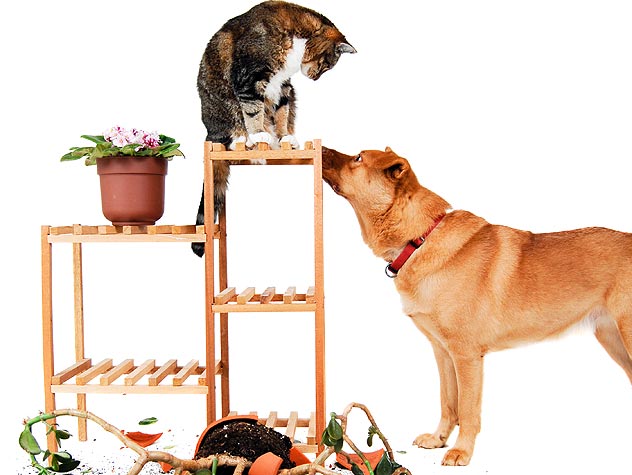
Also remember that until you really know who this dog is, do not leave the three of them alone in the same space together. The dog’s arousal could go over the top to aggression and you don’t want to come home to a deadly scenario.
I am assuming that your dog is just chasing in a playful manner and not trying to grab, shake and kill. If the latter is the case, you have a very dangerous situation on your hands. You then definitely need to work with an experienced professional trainer or behaviorist, and even then you may have no other choice but to re-home the dog into a cat-free environment.


|
A New Free Course on Dog Grooming Reveals the Secret Step-by-Step Techniques used by the best Dog Groomers in the country!
Finally, You Can Now Groom your Dog on your own at home without having to hire an expensive groomer! |