

Dog Training to Stop Violent Spinning
Observation and Monitoring
Keep a diary of your dog’s behavior and note trends that may point to a cause for the violent spinning. You may notice that certain stimuli, such as visitors to the house, the presence of other dogs or even just the arrival home of a family member, causes your dog to compulsively spin. By knowing the precursors to the behavior, you can anticipate and act promptly when it occurs.
Distraction and Redirection
Using your understanding of your dog’s behavior from the behavior diary, be ready to interrupt your dog before he begins to spin. Call his name, clap your hands or stomp your feet. Whatever gets his attention is good, provided you don’t startle him. By distracting him, you draw his focus away from the spinning behavior. Once you have his attention, redirect it to a positive outlet, such as a toy or activity, such as play.
Normalizing the Stimuli
Distraction and redirection are useful for stopping your dog when he wants to spin, but desensitization and counter-conditioning are essential in removing that desire. Using your knowledge of the trigger stimuli that cause your dog to spin, set up a situation in which your dog would be likely to react by spinning. For example, have a friend ring the doorbell or get a family member to leave and then return home.
Desensitization and Counter-Conditioning
Repeat these scenarios with as much frequency as is convenient. It’s essential to act as normally and calmly as possible while your dog is exposed to these trigger stimuli. By repeatedly exposing him to the stimuli, you are desensitizing him to them. Over time, the effect of the stimuli will diminish. Many dog owners make the mistake of pandering to their pets when they’re exposed to stimuli. A good example of this is the well-meaning owner who fusses over their pet when fireworks are going off. The dog notices that the owner is behaving unusually and therefore becomes agitated. By behaving normally when a trigger stimulus is present, you slowly counter-condition your dog.
Operant Conditioning
Each time he reacts calmly or indifferently to a stimuli that previously caused him to spin, give the dog a reward. This teaches him that calmness and passiveness have a positive outcome; it’s called operant conditioning and is the basis of reward-based training. Once your dog learns that his calm behavior results in a reward or treat, he’ll instinctively repeat the calm behavior.
How to Praise a Dog in Training
Know When To Use Praise
Dogs don’t understand cause and effect unless one comes immediately after the other. When you praise your dog, he thinks he’s being praised for whatever he just did. So it’s important to say “good dog” or give a small treat the moment he does the desired action. It works the same way for reinforcing a command your dog has already learned. If your dog reliably lies down every time you say “down,” you should still praise him every time he does it, but praise him the moment he does it. If you wait another moment, he might stand up, and then he’ll think that’s what you’re praising him for.
Do Not Praise Inappropriate Behavior
This may seem obvious, but many dog owners reward inappropriate behavior by inadvertently giving their dog positive reinforcement. For example, if your dog greets you at the door barking, and you respond by hugging him and speaking to him in either an enthusiastic or a consoling tone, your dog will think you are pleased with the behavior and he’ll keep doing it. The best way to handle unwanted behavior is to ignore it. The moment your dog stops barking, or whatever he’s doing that he shouldn’t be doing, praise him lavishly.
Dog Training Toys
Food Puzzles
Mental stimulation provides exercise, relief from boredom and an outlet for natural behaviors like chewing and hunting. Food puzzles range from basic toys stuffed with kibble or canned food to more advanced toys that require problem solving to obtain the hidden food.
Tug and Fetch
Tug and fetch toys, like ropes and tennis balls, provide reward when teaching a dog self-control. While playing fetch or tug, ask your dog to sit or down. When he responds correctly, say “yes” and toss the ball or invite him to reengage in tug. By using play as a reward, your dog learns that self-control is a valuable skill to practice.
Flirt Pole
A flirt pole looks like a large cat teaser. This toy provides exercise that teaches muscle control and balance. It can be used to teach a dog self-control and “chase” or “get it” on cue, as well as improve the “point” skill for hunting dogs. Allow the dog to reengage in chasing the toy for each successful self-control response.
How to Use Puppy Pads & Outdoor Potty Training Together
Set the Rules
Start establishing firm habits from Day 1. Choose specific places to be your outdoor puppy bathroom and your indoor puppy bathroom. Stay away from high-traffic areas or locations unsuitable for a potty area, like a frequently used bathroom, kitchen, children’s room or living area. Pick a place you can live with long-term, as relocating your dog’s inside bathroom later can cause problems. Use commercial puppy pads or, alternatively, newspapers or even a cat litter box filled with sod. Alternate where you take your dog so he gets used to both spots.
Train Your Dog
After your dog wakes up from sleeping, and after he eats, drinks or chews for a long time, put him on his leash and take him to one of his designated bathroom spots, alternating between indoor and outdoor spaces. If he doesn’t go within a few minutes, remove him from the space but keep him tethered to you, or supervise him closely to make sure he doesn’t try to eliminate elsewhere. Repeat the process every few minutes until you have success, and lavish your pup with praise. Get into a habit of going through these steps every time you think your dog needs to go.
Positive Reinforcement
Use treats like doggie snacks as a reward when your dog uses one of his designated bathroom spots. This positive reinforcement will demonstrate that good things happen when he goes to the bathroom where he’s supposed to. It will also make potty time fast. Dogs, especially young puppies, often get distracted and want to play when they’re supposed to be using the bathroom. Knowing they get a treat immediately after elimination will make them more likely to get down to business right away.
Be Mindful of Age
Very young puppies and older dogs have a difficult time controlling their bladders and bowels. The Humane Society of the United States says, on average, a puppy can hold its bladder for approximately one hour for every month old he is. During your initial training stages, create a schedule for feeding your dog and taking him to his designated bathroom areas. To help prevent accidents, place a piece of linoleum or plastic sheeting under the inside pee pad until your puppy gets used to going in one of his two designated spots and doesn’t have accidents.
Things to Consider
While there are practical reasons for teaching your dog to eliminate both inside and outside, it can be more challenging than an outside-only housebreaking regimen. Be prepared for initial accidents and don’t lose your patience. Rather, give positive rewards and stick to your plan, long-term. To maintain a nice-smelling household, change out pee pads on a regular basis so you don’t have lingering odors. If your puppy has an accident elsewhere in the house, immediately clean it up and treat it with an enzyme-dissolving agent to ensure he doesn’t consider the accident area his new bathroom.
Transitional Training
If your ultimate goal is to wean your pup from pee pads to full outdoor elimination, make a gradual transition. If your indoor bathroom area is located far away from a door, slowly move the pee pads closer to the door week by week. Do this until your pup reaches an age when he can be expected to hold his bladder and bowels for several hours, or when an adult dog is in a regular habit of using his designated spots. Eventually you’ll move the pee pad right next to the door, and then outside the door to his outdoor elimination spot. You can then be done with the pee pads.
How to Potty Train Using Training Pads
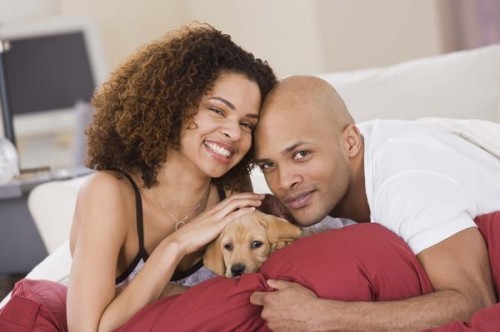
2Spread training pads all over the surface of the confined area of floor at first so that the puppy won’t miss its mark. If you just put one or two pads in the area, you can’t expect the puppy to know that’s where you want it to go.
3Remove soiled training pads and replace them with fresh ones as needed. Make note if there’s a specific area the dog tends to relieve itself upon.
4Remove a training pad every three days, but not the ones that cover the areas the puppy seems to favor.
5Keep removing training pads every three days until there’s just one left. Discard and replace the training pad as needed.
The Koehler Method of Dog Training
About William Koehler
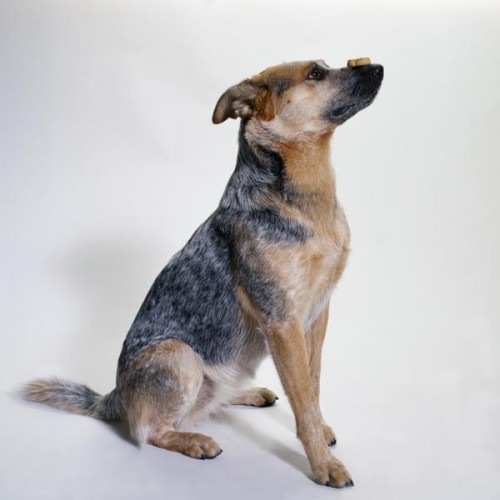
William Koehler was a specialist dog trainer who trained dogs for film. He was famously unsentimental and would use pain as much as he would he use reward in order to motivate a dog to perform an action. While modern trainers typically favor positive reinforcement, Koehler advocated a balance of positive reinforcement and positive punishment. In short, he introduced positive stimuli, or rewards, to a dog’s environment when the dog did good and introduced negative stimuli, or punishment to a dog’s environment when the dog did bad.
Goals of the Koehler Method
The Koehler method sets out to empower all dog owners to have off-leash control of their dogs. To achieve this, owners must first teach the dog that certain actions have good consequences and other actions have bad consequences. The outcome of this approach is that the owner need not rely on the leash to control the dog, because the dog understands clearly which actions are desirable and which are not.
Philosophy of Choice
Koehler, like many noted dog trainers, believed that dogs perform actions out of choice. For example, a dog will choose to tip over a bin to eat some of the contents. Because those contents taste good, he’s likely to choose to perform this action again. However, if the contents of the bin were distasteful to the dog, he would be unlikely to repeat the action. Koehler’s method utilizes this philosophy.
Learning Patterns
The key tenet of Koehler’s method is the learning pattern “Action > Memory > Desire.” Koehler’s entire process assumes that when a dog performs an action, his memory of that action inform his desire to repeat it. So if a dog barks and is subsequently punished, his memory of that action is negative, lowering the chances of him desiring to repeat it. But if the dog is rewarded, his memory of barking is positive and the chances of him wishing to repeat it increase.
Easiest Age for Dog Training
Getting Started
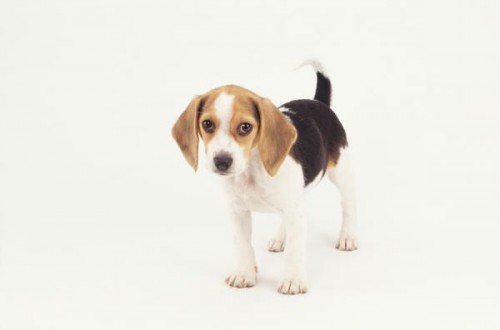
By the time a puppy is 10 to 12 weeks old he’s ready and eager to absorb basic obedience training and to learn simple tricks. This is a good time to teach him to sit, shake hands and to come when you call him. It’s also the ideal age for you to take him to a good puppy class so he can develop social skills and learn to get along with other people and dogs. Your dog will continue to learn easily throughout his entire first year, and once he has the idea, you’ll be able to give him more advanced training as he gets older.


|
A New Free Course on Dog Grooming Reveals the Secret Step-by-Step Techniques used by the best Dog Groomers in the country!
Finally, You Can Now Groom your Dog on your own at home without having to hire an expensive groomer! |